
The Cheapest Way to Send Money from South Africa (2026 Guide)
Banks average 9.5% per transfer, digital channels 3.65 — and the biggest cost usually hides in the exchange rate, not the fee. Five ways to send money from South Africa, compared honestly.
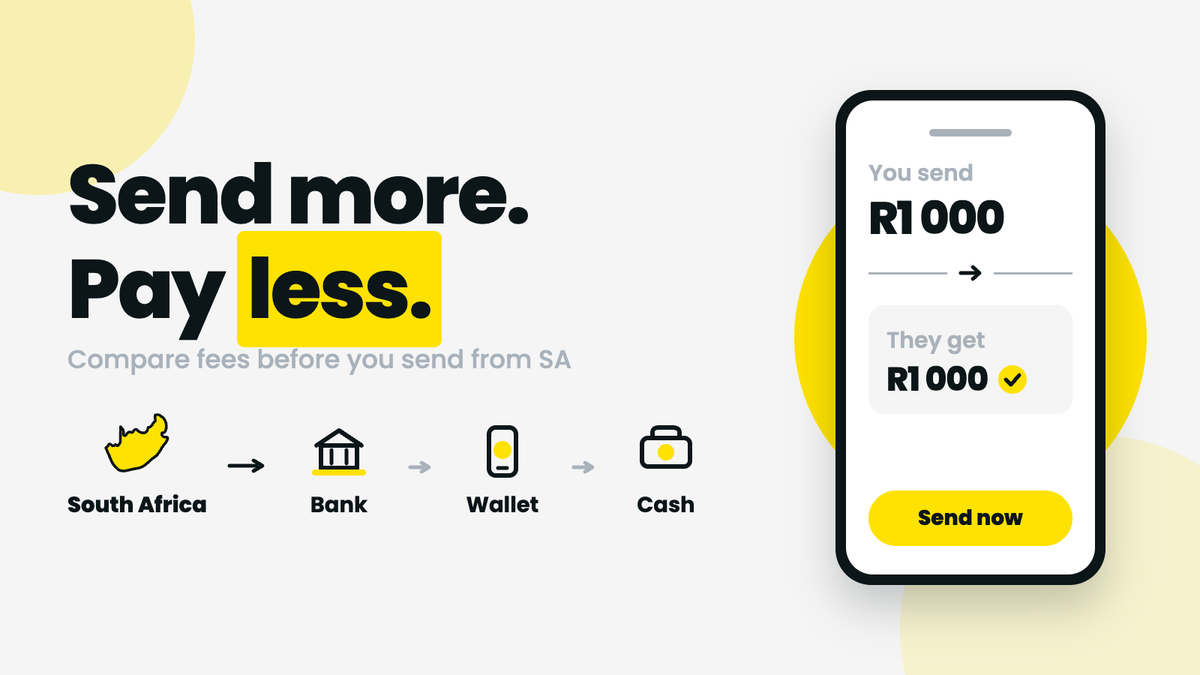
Quick answer: the cheapest way to send money from South Africa is almost never the most familiar one. For everyday amounts (R500–R10,000), a digital transfer with a flat fee and an upfront quote — sent from an app to a mobile wallet, bank account or cash-pickup point — usually beats everything else. Bank international wires are typically the most expensive route for small amounts, and "zero-fee" services often hide their charge in the exchange rate. The real skill isn't finding a magic provider; it's knowing how to compare the total cost. Here's how, in five minutes.
The Two Costs That Decide Everything
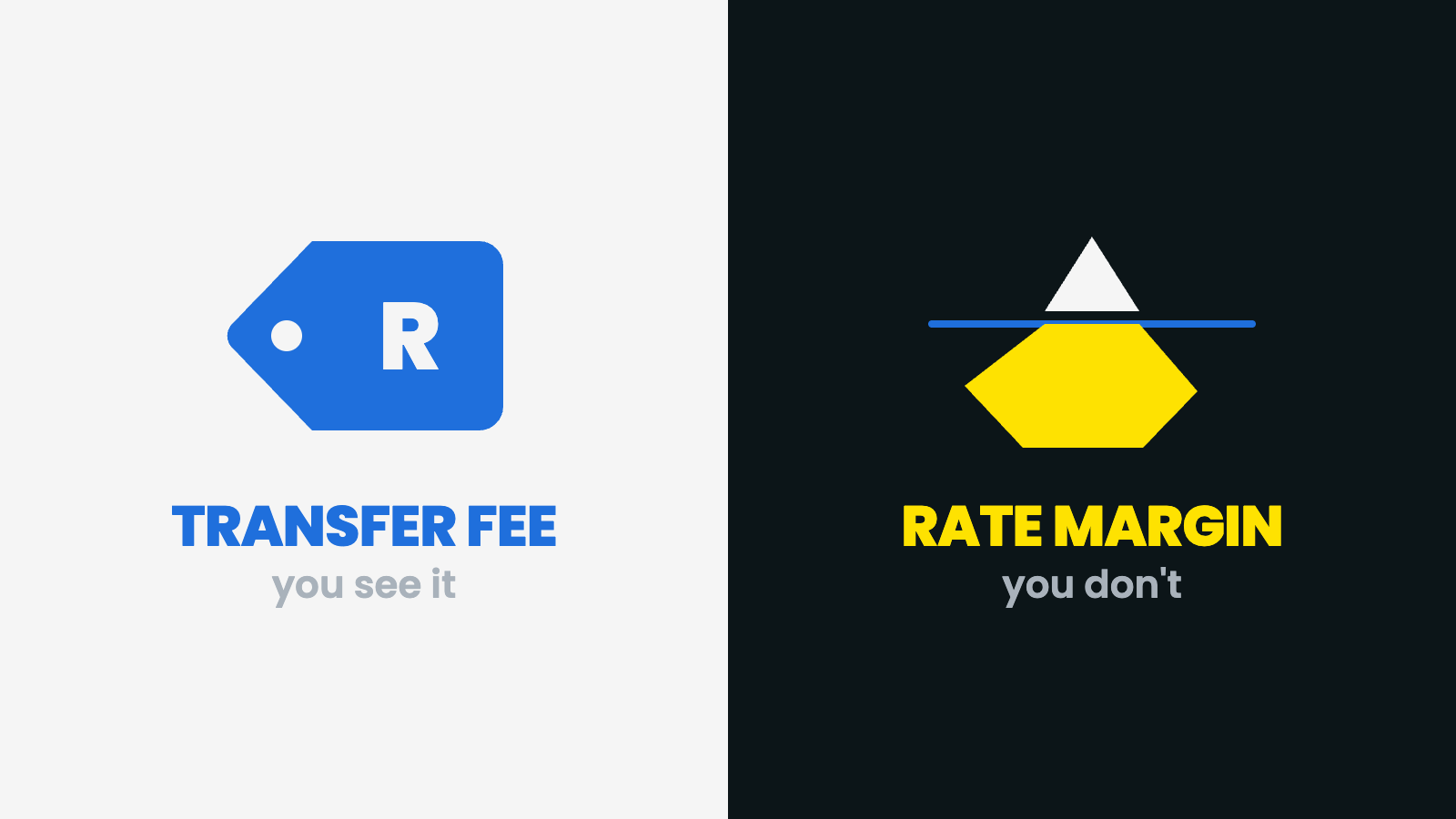
Every transfer has two price tags, and providers usually show you only one.
The first is the transfer fee — the amount charged to move your money. It's printed right on the screen, which is why everyone compares it.
The second is the exchange-rate margin — the gap between the real market rate and the rate you're given. This one is invisible unless you check what your recipient actually receives. Many "no fee" services make their money here, quietly taking a few percent of every transfer. We've shown how this maths plays out on the Zimbabwe corridor — the same logic applies everywhere.
The scale of the problem is well documented: according to the World Bank, sending $200 costs on average about 6.5% of the amount globally — more than double the international 3% target. Banks are the most expensive channel at around 9.5%, while digital providers average about 3.65%. Pick the wrong channel and you can easily pay double or triple for the same transfer.
Your Five Options, Compared Honestly
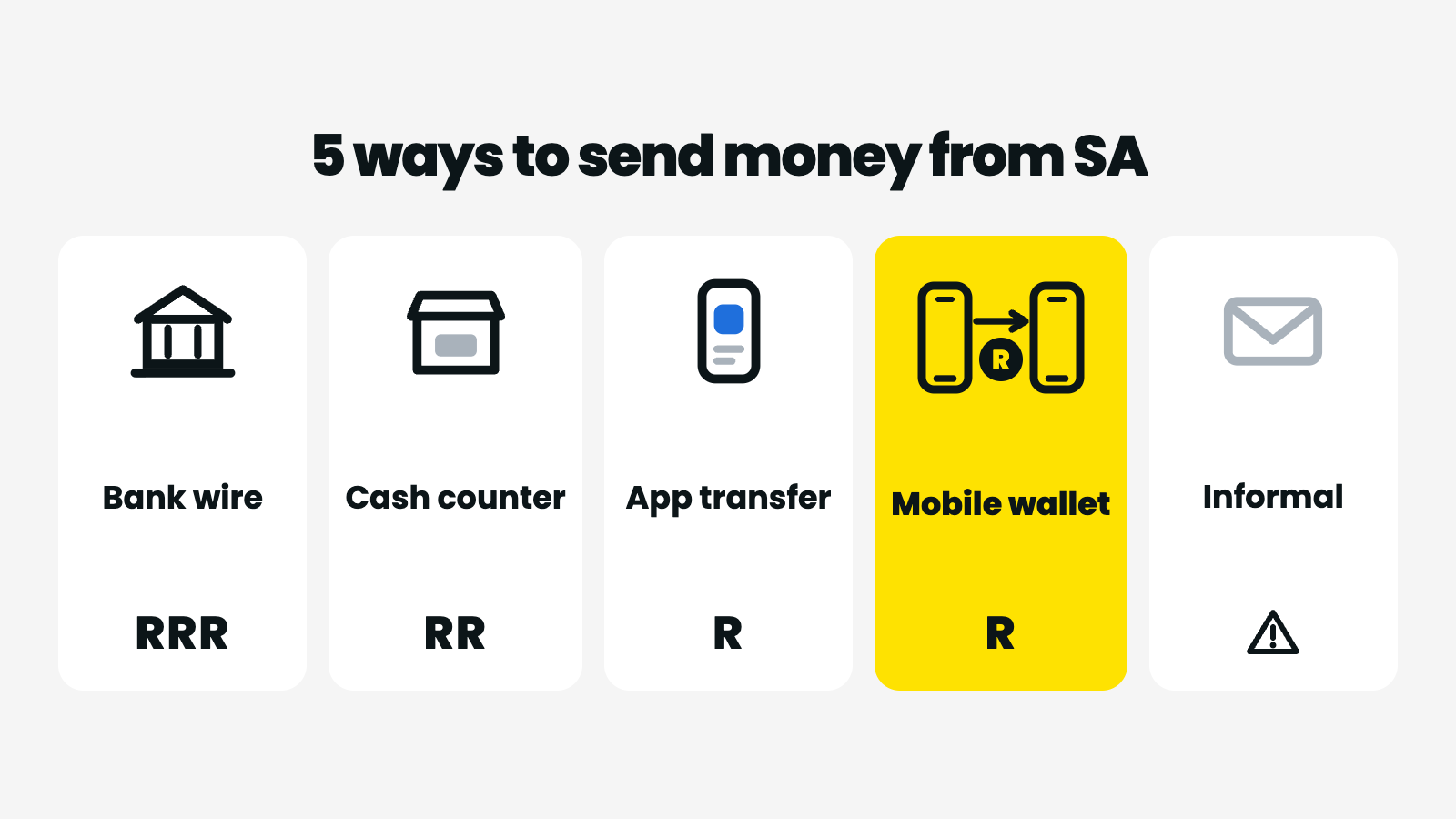
| Method | Typical all-in cost | Speed | Best for |
|---|---|---|---|
| Bank international wire (SWIFT) | High — fixed fees of R200+ plus rate margin; ~9.5% is the global bank average | 1–5 business days | Large, infrequent transfers where paperwork matters |
| Cash transfer at a counter | Medium — fees vary; queues and travel add hidden cost | Minutes to same day | Recipients who can only collect cash |
| Digital transfer from an app or wallet | Low — flat fee + rate shown upfront before you confirm | Minutes for mobile-wallet payout | Regular remittances R500–R10,000 |
| Direct payout to a mobile wallet | Lowest in many corridors — no cash handling on either side | Minutes | Supporting family in countries where mobile money is everywhere |
| Informal channels (taxi, bus, a friend travelling) | "Free" — until money is lost or stolen; no recourse, no record | Days, unreliable | Honestly: nothing. The risk isn't worth the saved fee |
Two of these deserve a closer look.
The bank wire feels safe and official, and it is — but for a R2,000 transfer, fixed charges alone can eat 10% or more before the exchange rate even enters the picture. Banks are built for large, document-heavy transfers, not for sending grocery money home.
The informal channel is the opposite trap: it looks free, and it's the most expensive mistake you can make. An envelope of cash on a bus has no tracking number, no reversal, and no one to phone. A regulated transfer costs a small fee and buys you a receipt, a reference number and a fraud team.
The Flat-Fee Rule
Providers charge transfer fees in one of two ways, and the difference compounds every month:
- A percentage fee grows with your transfer. 5% of R1,000 is R50; 5% of R5,000 is R250. Sending more punishes you.
- A flat fee stays the same regardless of the amount. On a R20 flat fee, a R1,000 transfer costs 2% — and a R5,000 transfer costs 0.4%.
The rule of thumb: for anything above roughly R1,000, a flat fee almost always wins — and the bigger the transfer, the wider the gap. If you send money home every payday, switching from a percentage to a flat fee can save well over a thousand rand a year on its own.
One caveat that keeps the comparison honest: the fee model and the exchange rate are separate. A great flat fee with a poor rate can still lose to a slightly higher fee with a fair rate. The only number that never lies is how much your recipient receives — compare that, on the day you send.
The Cheapest Way Depends on Where the Money Is Going
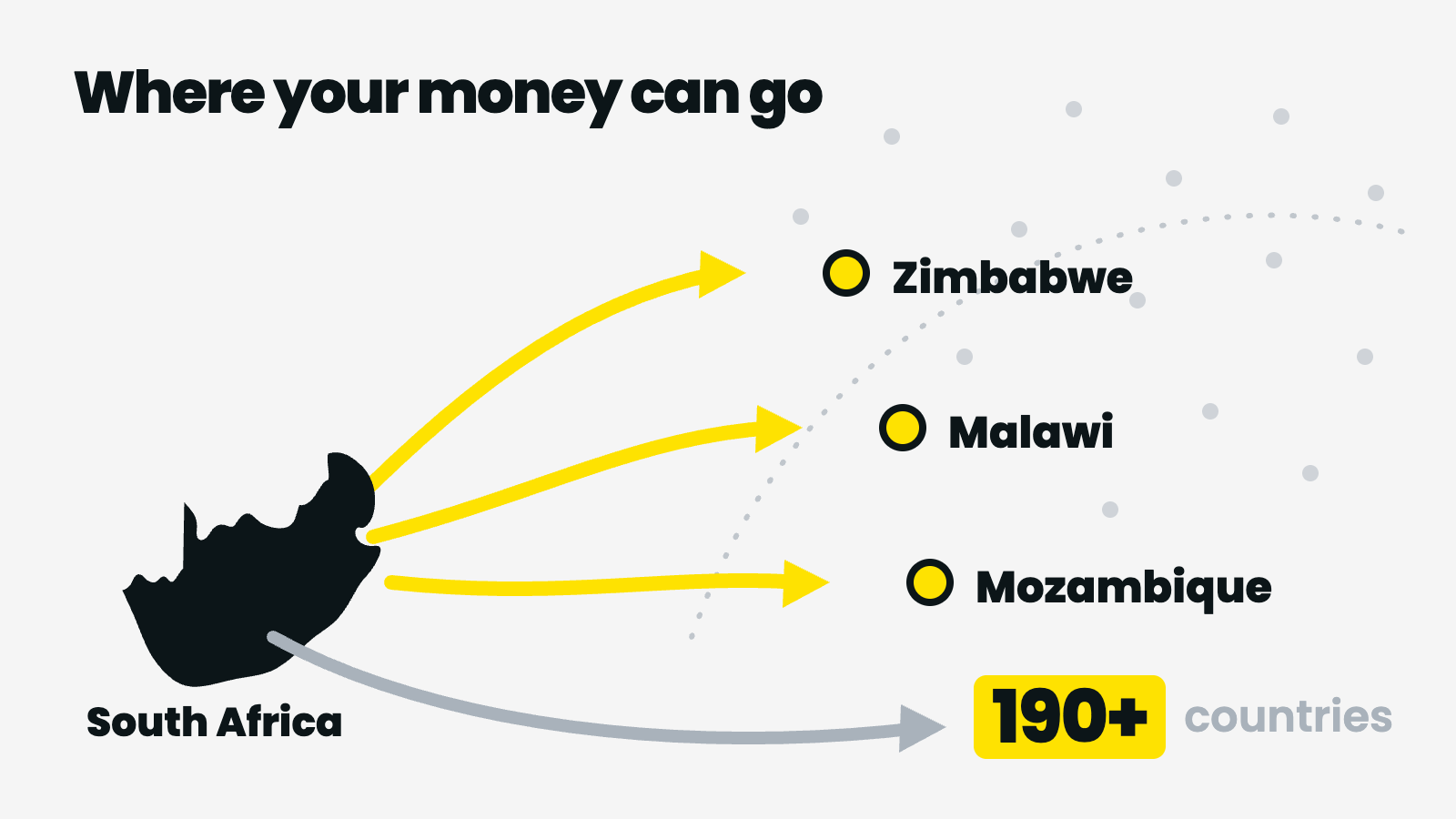
There is no single cheapest provider for every destination — costs differ corridor by corridor, and so do payout options. What to check for the three biggest corridors from South Africa:
- Zimbabwe — mobile-wallet payout is usually the fastest and cheapest route; cash pickup and bank deposit are available too. See the live fee and rate on the Zimbabwe corridor page.
- Malawi — mobile money is widespread, making wallet payout the convenient default; check the Malawi corridor page for current pricing in kwacha.
- Mozambique — M-Pesa and e-Mola payouts mean your family doesn't need a bank account at all; live metical rates are on the Mozambique corridor page.
Whatever the destination — SOLmate reaches 190+ countries through the Ria money-transfer network — the healthy habit is the same: open the quote, look at the fee and the amount received, and only then confirm.
What You'll Need to Send Legally
Cross-border transfers from South Africa run under exchange-control and FICA rules, and a regulated provider keeps you on the right side of both. You'll generally need:
- A valid ID document — a South African ID, a foreign passport, or valid asylum-seeker documentation
- Your recipient's details — full name plus their mobile-wallet number, bank account, or nearest collection point
- Proof of the source of funds for larger amounts
Note what's not on that list: a bank account. If a traditional bank has turned you away, you can still open a licensed wallet account with just a passport or asylum permit and send from your phone — no work permit, no proof of address.
Five Habits That Cut the Cost of Every Transfer
- Compare the amount received, not the fee. One number captures both the fee and the rate. It's the only fair comparison.
- Prefer flat fees once you're above ~R1,000. Percentages punish bigger transfers.
- Choose mobile-wallet payout where your family can use it. No cash handling on either side usually means the lowest cost and the fastest delivery.
- Never send informally. The saved fee is not worth an envelope that never arrives.
- Watch the rate if you're not in a rush. Exchange rates move daily; on a strong-rand day, more lands on the other side.
Frequently Asked Questions
What is the cheapest way to send money from South Africa?
For most everyday amounts, a digital transfer from a licensed app with a flat fee and an upfront quote — ideally paid out to a mobile wallet on the receiving side. Bank wires are usually the most expensive route for small amounts. Always judge by the amount your recipient receives.
How much does it cost to send money from South Africa?
It varies by channel and corridor. The World Bank puts the global average at about 6.5% of the amount sent, with banks around 9.5% and digital providers around 3.65%. A flat-fee digital transfer on a busy corridor can get close to the international 3% target.
Can I send money without a bank account?
Yes. A licensed digital wallet can be opened with a South African ID, foreign passport, or valid asylum documentation — no bank account or work permit needed — and transfers go straight from the app.
Is it legal, and what documents do I need?
Yes, through a regulated provider. You'll need a valid ID (SA ID, passport, or asylum documentation), your recipient's details, and proof of source of funds for larger amounts. Using regulated channels also gives you a tracking reference and consumer protection.
What is the fastest way?
Mobile-wallet payout — often minutes. Cash pickup is typically same-day; international bank wires are the slowest at several business days. Speed and low cost usually point to the same answer.
Sources: World Bank — Remittance Prices Worldwide. Figures correct as of July 2026; live fees and rates are always shown in the app before you confirm a transfer.