What Is a CVV Number and Why You Should Never Share It
The CVV is the small three-digit code on the back of your card that proves you are holding it during an online purchase. That is also why it is the first thing fraudsters ask for on the phone.
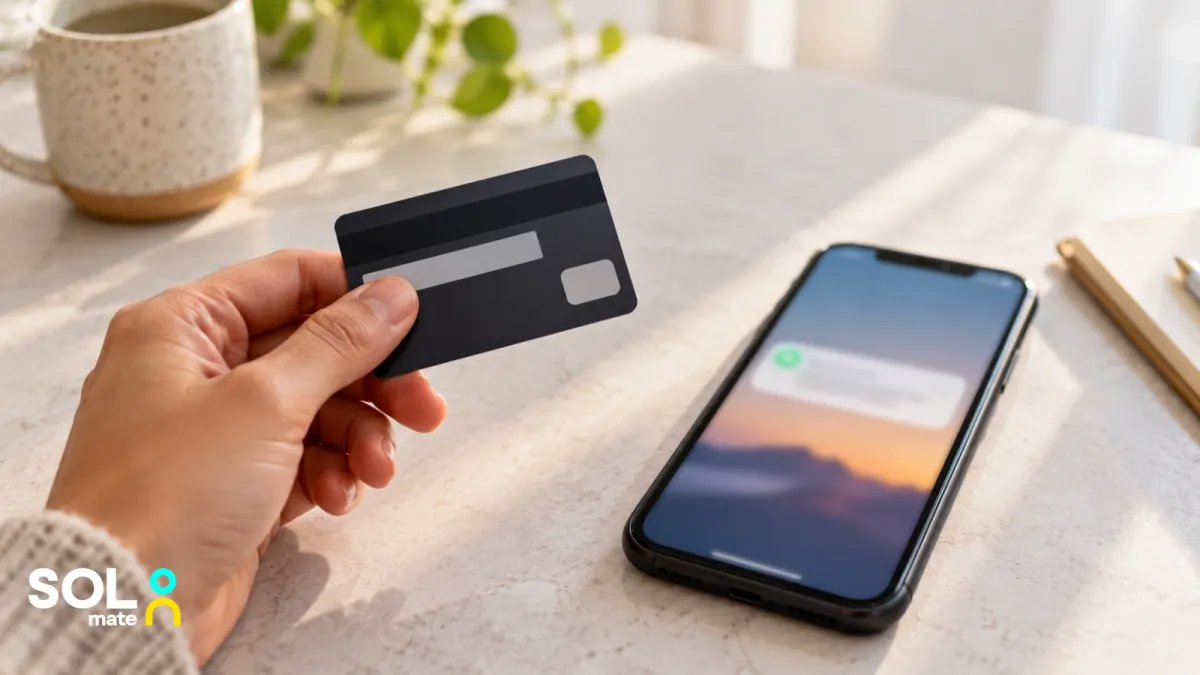
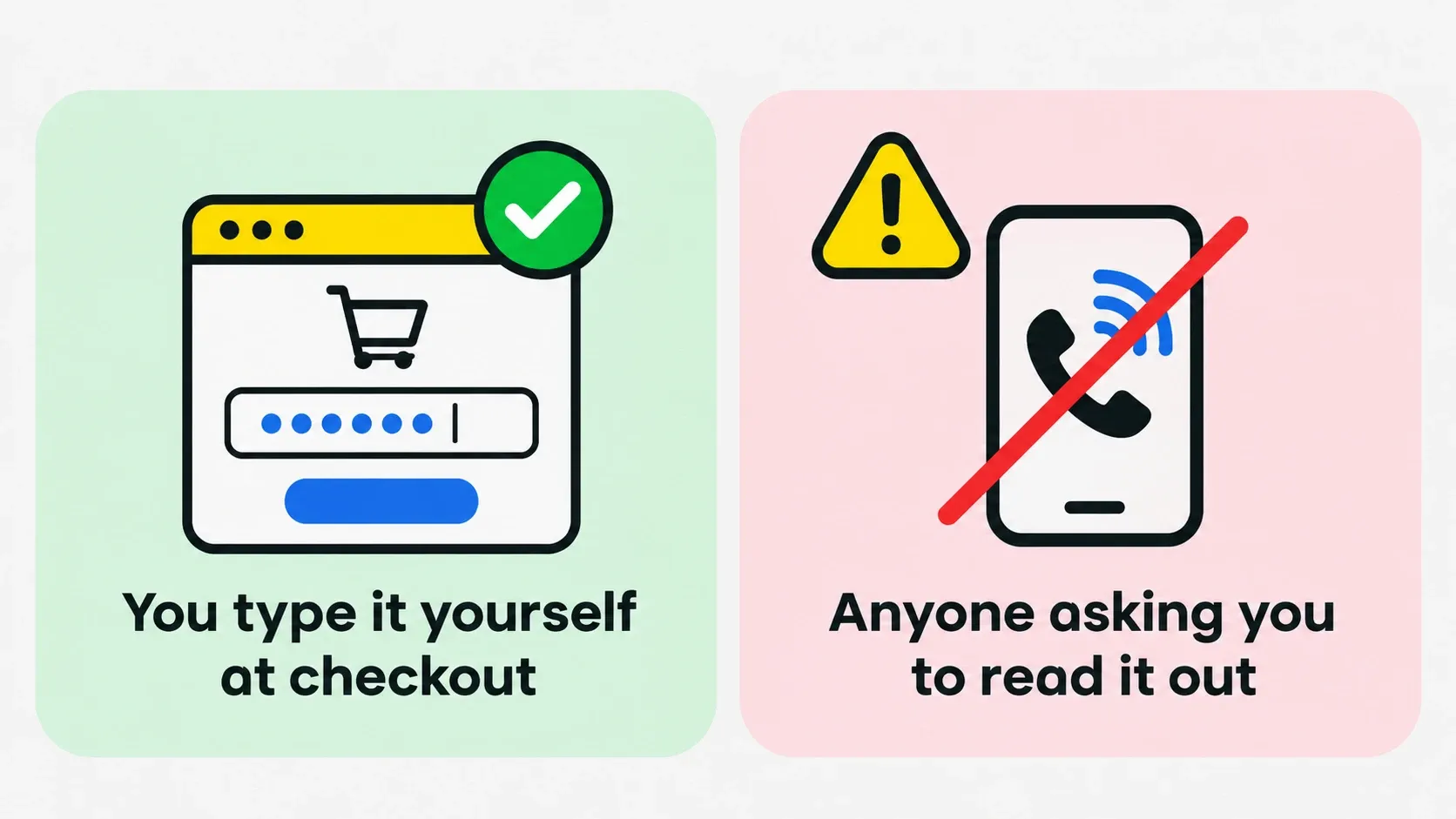
A CVV, or card verification value, is the three-digit security code printed on the back of your debit or credit card, next to the signature strip. (On some cards, such as American Express, it is four digits on the front.) Its one job is to prove in an online or phone purchase that the person making the payment physically holds the card, not just a copy of its number. You type it yourself at checkout, and you never read it out to another person: no bank, no shop, no police service and no employer will ever legitimately need your CVV spoken over the phone or sent in a message.
Where to find it
Turn your card over. On the back, at the end of the signature strip or beside it, there is a group of digits: the last three (or four) are the CVV, sometimes labelled CSC, "card security code". It is deliberately not embossed and not stored with the card number, so a skimmer who copies your card at a till cannot also copy your CVV unless they see the back of the card.
What the app shows, and why that matters
Not every card has its full details in the app. With the SOLmate debit card, the full card number and CVV exist only on the physical card: the app shows just the last four digits and the expiry date. That split is a feature, not an inconvenience. If your phone is stolen, whoever unlocks it can see your balance but cannot read your card details, and if your card is lost, nobody can piece the CVV together from inside your account. The card is a plastic Mastercard, delivered by courier or collected from a pickup point, and it costs R29 a month with a once-off R49 activation. How card charges compare to everyday account fees generally is covered in the guide to bank charges in South Africa.
The phone call that asks for it
Card fraud in South Africa rarely starts with stolen cards. It starts with a phone call. Someone introduces themselves as being from your bank's fraud department, sounds competent and worried, and asks you to "verify" a payment by reading out your card number, the CVV, and then the SMS code that arrives during the call. Each piece sounds harmless; together they are your entire card. The SMS code deserves its own sentence: it is a one-time confirmation that you initiated a purchase, and reading it to anyone converts their transaction into yours. Banks' own safety messaging repeats one line for a reason: hang up and call the number on your card or in the app, never the number the caller gives you.
How online purchases stay safe without giving it away
When you shop online with your card, the CVV is only one of the checks. With SOLmate, every online purchase is additionally confirmed with a code sent to your phone by SMS, so a merchant, or a thief, who somehow has your card details still cannot complete the payment without your handset. Two practical habits close the remaining gaps:
- let the SMS confirmation be the alarm: if a code arrives when you are not buying anything, someone else has your details, and your next move is to block the card in the app,
- treat any surprise delivery or taxi request that "only needs your card number to confirm" as the script above, because it always is.
Inside the app, the card can be blocked and unblocked by the cardholder directly, and before a block takes effect, any money loaded on the card is moved back to the wallet balance, so a blocked card never traps your funds. If a purchase does go through without you, the same screen is where you stop everything fast while you call support.
Where the card works, and where it doesn't
The CVV comes into play online, not in shops. Tapping the card at a till works without any code being entered, and the card can be used for normal local purchases. It cannot be tapped abroad, but it does work on international websites, which is how most SOLmate customers use it for online shopping from overseas stores. For money that has to move to a person rather than a shop, the card is not the only option: cash can be withdrawn without a card, and everyday services like airtime can be bought online straight from the wallet. If you are weighing whether the card fits how you spend, the first step is simply opening the account online and deciding later.
Sources:
Wikipedia: card security code (CSC/CVV)
Absa South Africa on never releasing goods or details on a caller's word
All pages were checked on 19.10.2026.
SOLmate is not a bank. SOLmate (SOL Ecosystem (Pty) Ltd) is an authorised financial services provider (FSP No. 52248) and registered credit provider (NCRCP16037).