You Sent Money to the Wrong Account. Now What?
One wrong digit and your money is sitting in a stranger's account. The first hour decides most of it: here is the exact order of steps, and what the outcome honestly depends on.

Thabo paid his brother's rent on a Friday afternoon, typed the account number from memory, and hit send. The confirmation came back instantly. It was only when his brother called to say nothing had arrived that Thabo looked again: one digit wrong. The person in this story is fictional, but the situation is common, and the sequence of what happens next is real. An EFT leaves your account immediately, but between the banks it travels for one to two business days, up to three depending on the banks involved, and inside that window your actions matter more than at any other time.
The first thirty minutes
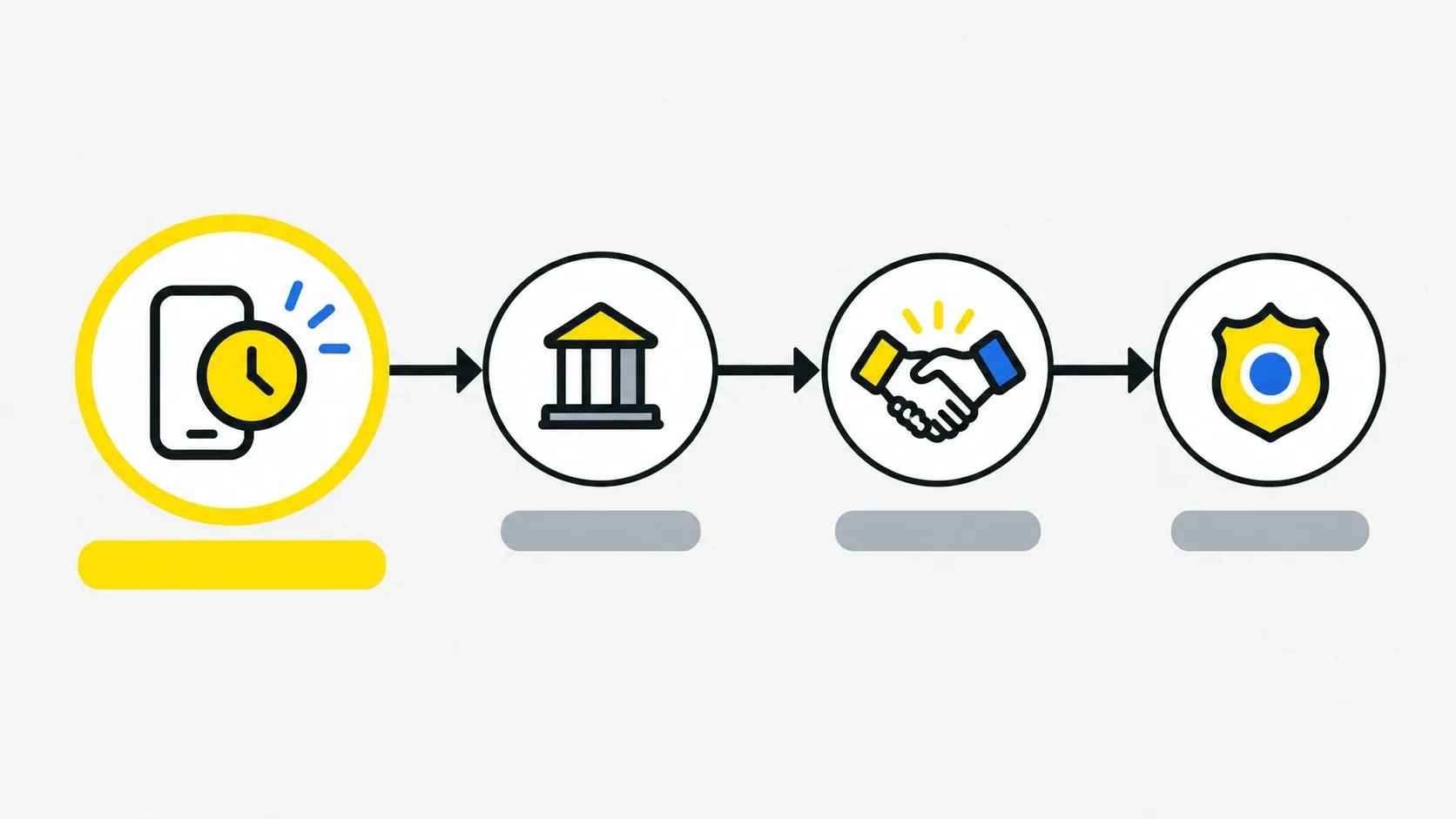
Thabo's first move was the right one: he called his bank while the transfer was still fresh, before the weekend. The bank cannot simply grab money back out of another person's account, and no sender can reverse a transfer by themselves once it has been sent. What the bank can do is attempt a recall: a request to the receiving bank to flag the funds and approach the account holder for permission to send the money back.
The earlier the request is logged, the better the odds that the money has not been spent or withdrawn yet. In Thabo's case the recall was logged within the hour, which is roughly the window where a recall is even possible for an instant transfer: a same-day RTC payment lands within about sixty minutes, so for those the window is minutes, not days. The trade-offs between standard and instant transfers are explained in the guide to instant EFT and RTC payments in South Africa.
What the system does to stop this from happening
Thabo's typo got through, but most wrong-account payments never happen at all, because transfers are checked before they leave. A valid account number has a check digit in it: if one digit is mistyped, the number usually fails the arithmetic and the payment is rejected. After that, banks run a name check that compares the recipient's name with the account, and most money apps refuse to send when the two do not match. Thabo's error slipped between the checks because the number he typed was real, active, and belonged to a name similar enough to pass. The lesson is not that checks fail, but that they are a net, not a wall: they catch most mistakes, and the final responsibility for reading the confirmation screen is yours.
When the recipient says no
Here the story turns honest, because this is where most people's expectations meet reality. The receiving bank can ask the account holder to return the money, but it cannot force them. The banking ombud has said plainly, in a real case where a customer paid R63,000 into the wrong account and the recipient refused to return it, that once a recall cannot be successfully processed, the bank cannot become involved in the dispute between the sender and the account holder.
What remains is a civil matter: keeping money you were paid in error is unjustified enrichment, and the sender's options are to approach the person directly, through a lawyer, or through the police if fraud is suspected. Thabo's money, in our story, came back on Tuesday: the recipient had not touched it and agreed to the recall. Had she refused, his next documents would have been the payment confirmation, the bank's recall reference, and a case number from the police station.
If the money went to a wallet by phone number
Wallet-to-wallet transfers work differently, because the destination is a phone number, not a typed account string. That removes the typo-with-a-valid-number problem: with SOLmate, a transfer to a number that has no SOLmate wallet simply cannot be sent, the app blocks it before the money moves. If money is sent to the wrong SOLmate customer, the first hours follow a script that support runs every week: the wrong recipient is contacted and asked to return the funds, usually with a first contact within about two hours.
The sender cannot be told who received the money, because customer data is protected under POPIA, and the return itself is not guaranteed: if the recipient refuses, the honest advice is the same as with any bank, open a case with the police. If the payment was sent from a wallet to a number that belongs to no one, support can usually reroute it manually within about two hours, or the next business day if it lands outside working hours.
Vouchers have their own clock
An eWallet-style voucher behaves differently again, and it is the friendliest case of the lot. A voucher that nobody collects does not need a recall at all: after 30 days the money returns to the sender automatically. A voucher sent by mistake can also be cancelled, and the timing of the cancellation decides the fee: cancelled by the sender in the app, the transfer fee is not refunded, while a cancellation through support refunds it. The details of how voucher lifetimes work are in the article on how long an eWallet takes to expire.
What Thabo does differently now
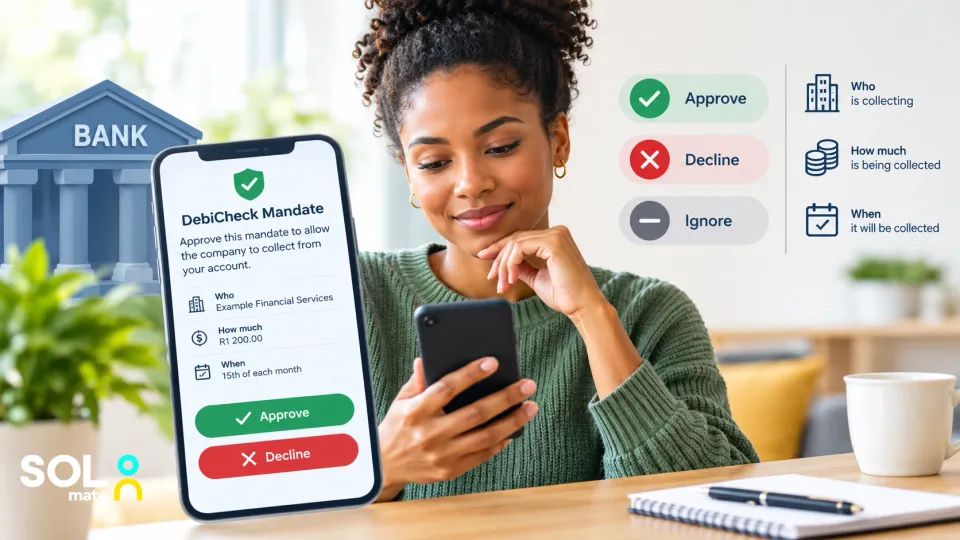
The habits that came out of that Friday are ordinary and worth copying. He saved his brother's details as a beneficiary so the number is never typed fresh again. He sends a quick message before large payments, so both sides know one is coming. And he knows the difference between this situation and its cousin: a debit order reversal is a separate process with its own rules and its own timing. The last habit is the one that actually saved him: he checked the confirmation, the moment it appeared, instead of assuming. The first hour belongs to whoever notices first.
Sources:
EWN: banking ombud on wrong-account payments and refused recalls
The South African: what happens when you pay into the wrong account
Basson Blignaut: unjustified enrichment and recovering transferred money
All pages were checked on 19.10.2026.
SOLmate is not a bank. SOLmate (SOL Ecosystem (Pty) Ltd) is an authorised financial services provider (FSP No. 52248) and registered credit provider (NCRCP16037). This article is general information, not financial or legal advice.