How to Withdraw Money Without a Card in South Africa (2026): Till Code, Cardless ATM or Phone Voucher
Lost your card, waiting for one, or never wanted one? In South Africa you can get cash at supermarket tills and ATMs with nothing but your phone. Three routes, exact fees, what happens when a code expires, and a note on SASSA grants.
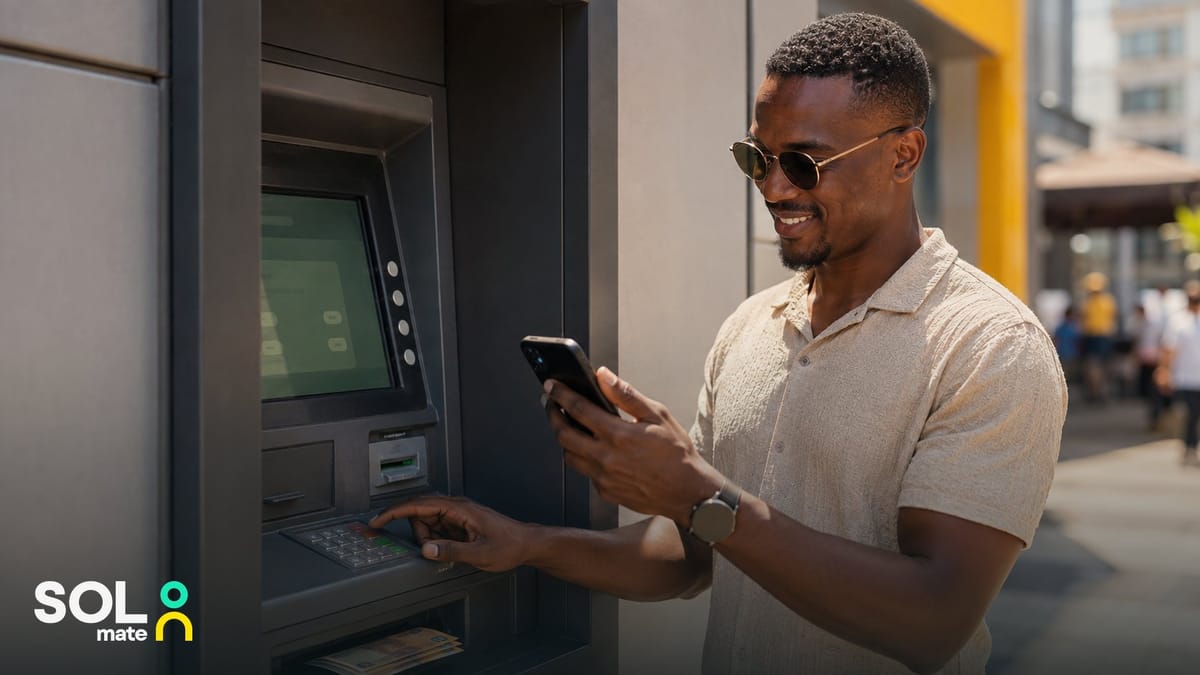
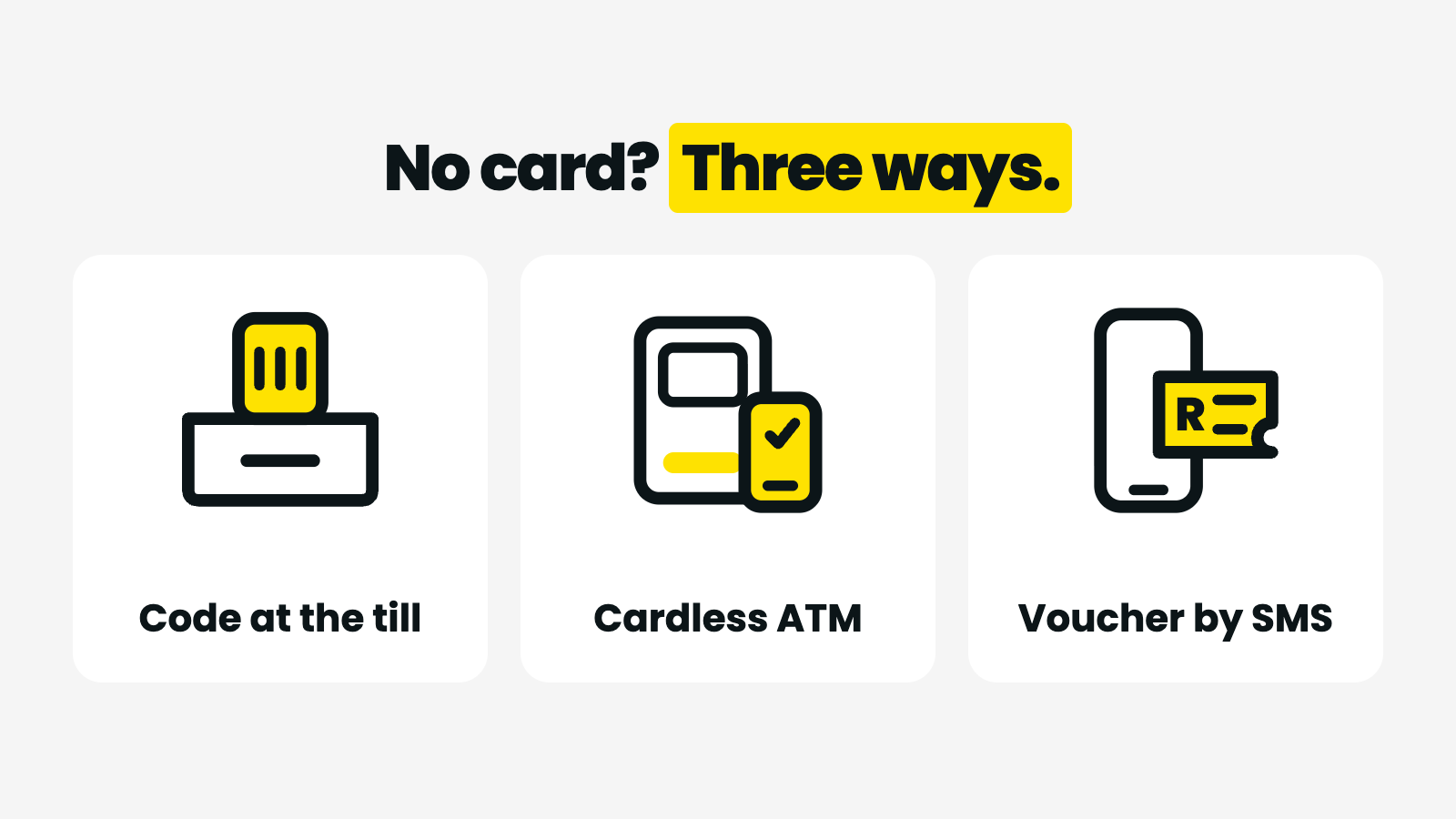
Quick answer: you don't need a bank card to get cash in South Africa. Three routes work with nothing but your phone: a one-time code from your wallet app, cashed at a supermarket till (Shoprite, Checkers, Usave, Pick n Pay); your bank's cardless service at its own ATMs; or a voucher sent to a cellphone number, cashed out with a PIN at a till or ATM. If a code or PIN has already expired on you: nothing is lost — the money is still in the account it came from, and you generate a new one. Below: exact steps for each route, which one fits your situation, what each costs, what happens when codes expire, and a note on SASSA grants.
What "Cardless" Actually Means
The card was never the money — it was just the key. A cardless withdrawal is any way of taking cash out of an account without putting plastic into a machine: you prove it's you with a one-time code on your phone instead. South Africa's payment networks now accept that second key almost everywhere. Supermarket tills double as cash points, most bank ATMs accept an app-generated PIN, and every code is created fresh, used once and dead within a set window.
That's also why a cardless bank account is a real thing rather than a workaround. A digital wallet like SOLmate can be opened and run entirely from the app — you can add a physical card later, or never — and it's the same principle that lets people get paid without a traditional bank account. The phone-only routes below aren't a consolation prize for people without cards; on cost, safety and queue time they often beat the card at its own game.
Which Route Fits Your Situation
People land on "how do I withdraw without a card" from very different places. Find your row first — it saves reading three sets of steps.
| Your situation | Best route | Why |
|---|---|---|
| Lost, stolen or swallowed card — you still have the app | Route 1 (till code) or Route 2 (your bank's cardless ATM) | Money is in your own account; only the plastic is gone |
| Waiting for a new card to arrive | Route 1 (till code) | Works from day one, no card needed at all |
| No card and no bank account | Route 3 (voucher to your number) | Someone sends money to your cellphone; you cash it with a PIN |
| Need to give cash to someone far away | Route 3 (you're the sender) | They cash out at a till or ATM near them |
| Collecting a SASSA grant | SASSA's official channels | Grants have their own collection rules — see the section below |
Route 1: Cash at the Till With an App Code (the Everyday Option)
This is the route you'll likely use weekly, because it happens in shops you already visit. In the SOLmate app it's called a wiCode withdrawal, and the whole thing takes under a minute:
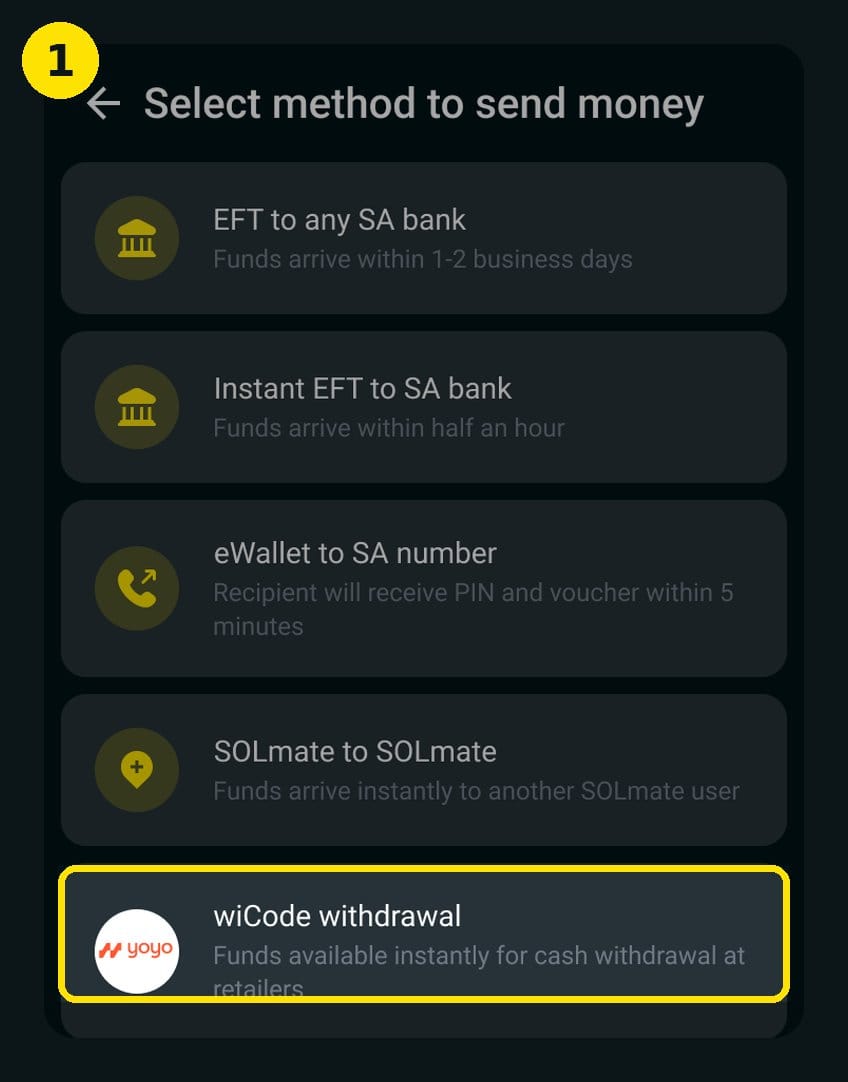
1. Open the app and tap Send Money → select wiCode Withdrawal.
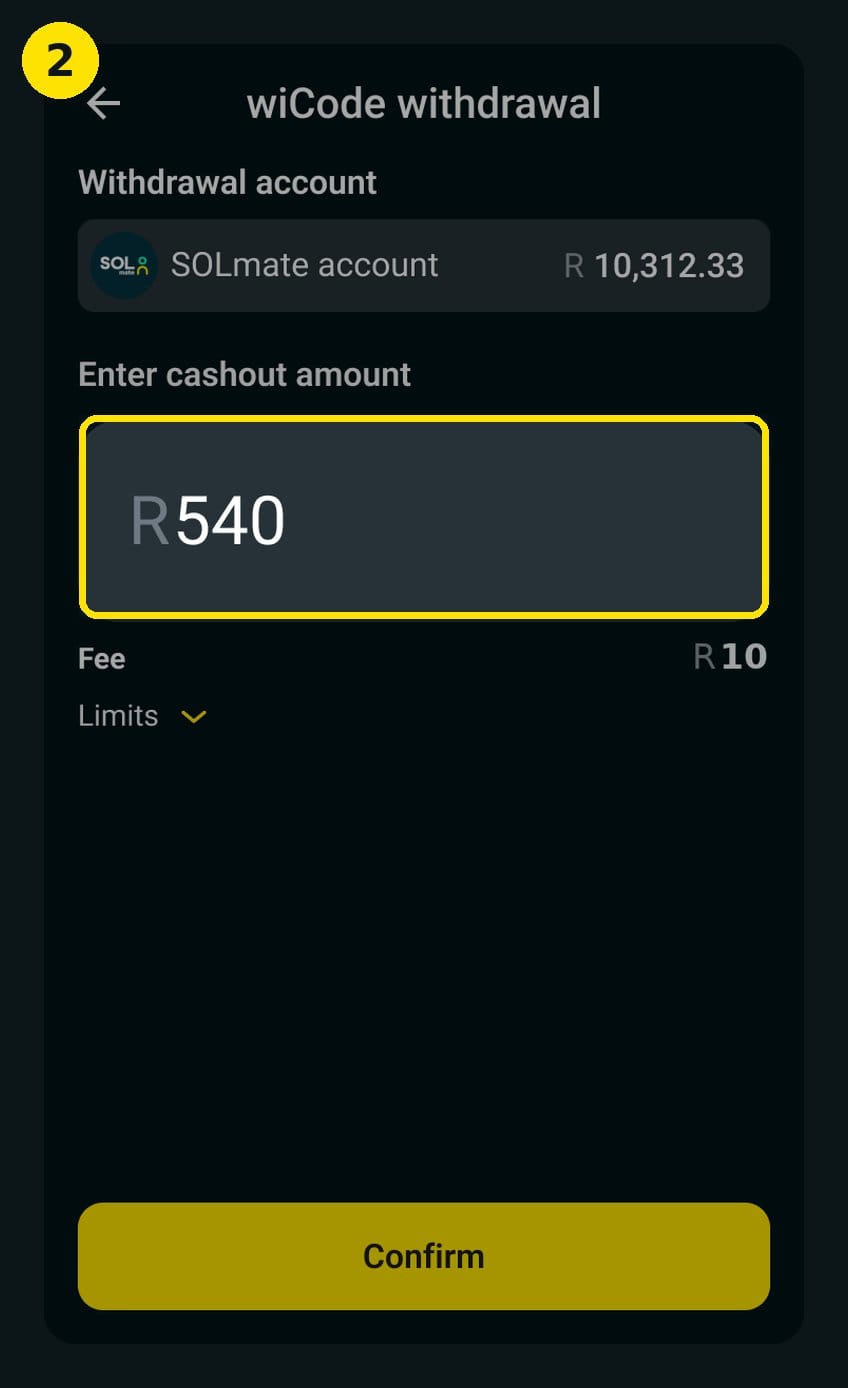
2. Enter the amount and generate your unique code.
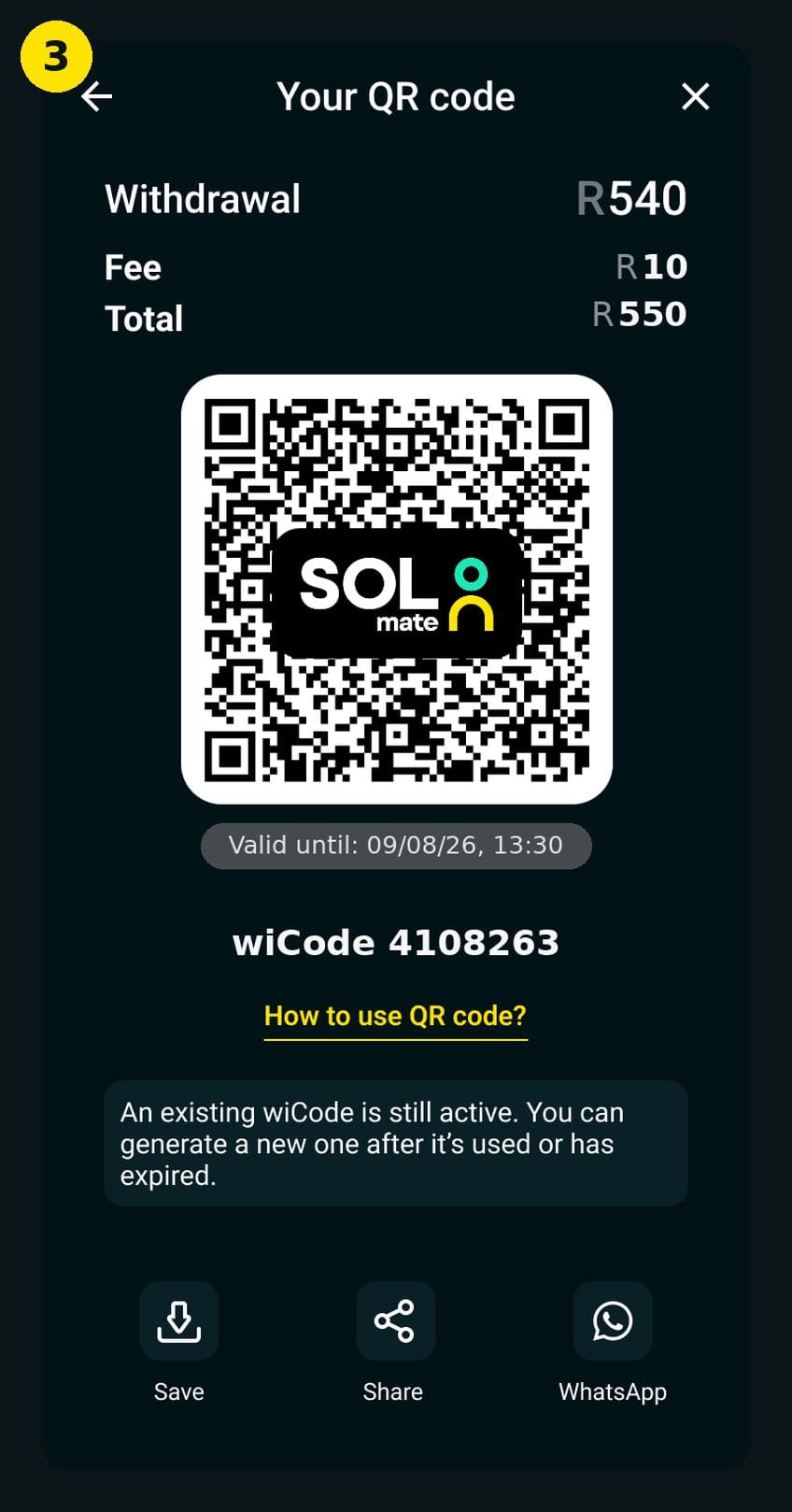
3. Show the code at the till — Shoprite, Checkers, Usave or Pick n Pay.
4. Take your cash. Done.
Three rules worth knowing. The code expires after one hour — if it lapses, your money stays put and you simply generate a new one. You can hold one active code at a time, which stops anyone quietly generating codes off your account. And the fee is a flat R10 per withdrawal, whether you're taking out R200 or R2,000.
The same tills also work in reverse — you can deposit cash into your account with a code — so the supermarket effectively replaces the branch in both directions. If you've seen "wiCode" on a till sign and wondered what it is, there's a plain-English explainer of how wiCode works.
Route 2: Your Bank's Cardless ATM Service
Every major South African bank runs some version of cardless cash: you request a withdrawal in the banking app or by USSD, receive a one-time PIN or reference number, and enter it at the bank's own ATM — no card in the slot. The mechanics differ by bank (some send the PIN by SMS, some generate it in-app), so check your bank's official app or website for its exact flow rather than a third-party guide.
Two universal truths apply. First, the PIN is short-lived by design — that's the security feature, not a fault. Second, it usually works only at that bank's own ATMs, which is the route's main limitation: "can I do a cardless withdrawal at any ATM?" is the most common question here, and the honest answer is usually no. If there's no ATM of your bank nearby, a till-code route from a wallet app is the practical alternative, because supermarket tills aren't tied to any one bank.
One more thing worth checking before you rely on it weekly: what your bank charges for a cardless withdrawal. It's listed in the bank's own pricing guide, and the section on costs below shows why flat versus per-R100 pricing matters on larger amounts.
Route 3: A Voucher Sent to Your Phone Number
The third route isn't about withdrawing your own balance — it's how cash reaches someone who has no card and possibly no account at all. Money is sent to a South African cellphone number (SOLmate calls this an Ewallet; banks run similar send-to-cellphone services), and the recipient handles the rest without any app of their own.
Here's what the recipient side looks like with a SOLmate Ewallet, straight from the help pages:
- Within about 5 minutes an SMS arrives with a voucher number, a unique PIN and step-by-step instructions.
- The SMS lists where to cash out — Nedbank ATMs, Pick n Pay, Shoprite, Checkers, Boxer and Kazang-enabled stores are the supported locations named on the help page.
- The voucher stays valid for 30 days; if it isn't cashed by then, the full amount goes back to the sender automatically.
- No SMS? The sender asks SOLmate support via in-app chat to resend it — the money isn't lost.
If you're the recipient, cash out sooner rather than later — the clock is generous but real. A fuller walkthrough of cashing out a voucher, including what to do when the PIN doesn't work, is in how to withdraw eWallet money in South Africa.
Cardless Deposits: Putting Cash In Without a Card
The same logic runs the other way. If someone hands you cash and you want it in your account, you don't need a card or a branch for that either — you need a code:
- Open the SOLmate app, go to Top up and select wiCode Deposit.
- Enter the amount and generate the code.
- Hand the cash and show the code at a Shoprite, Checkers or Usave till. The deposit reflects instantly.
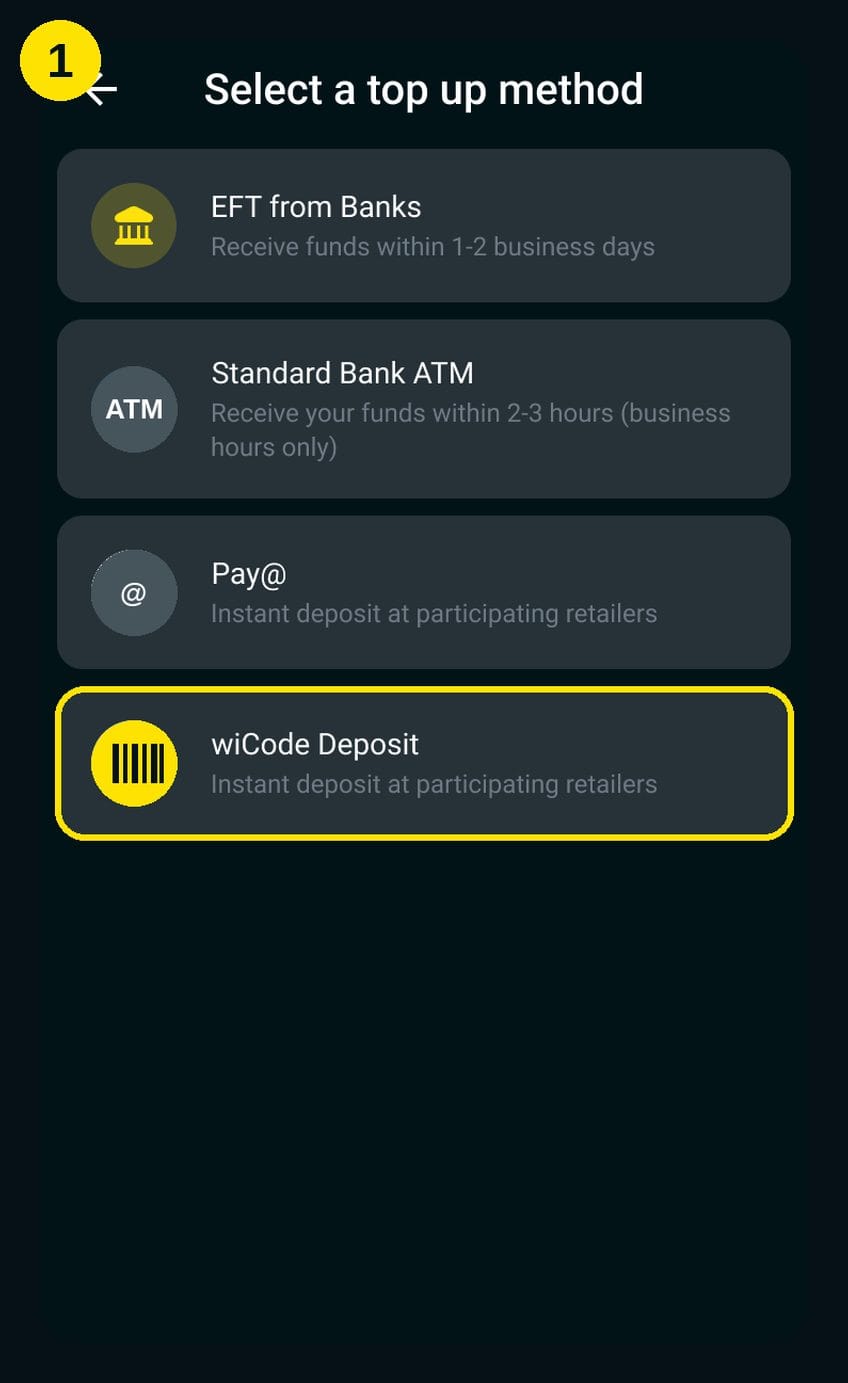
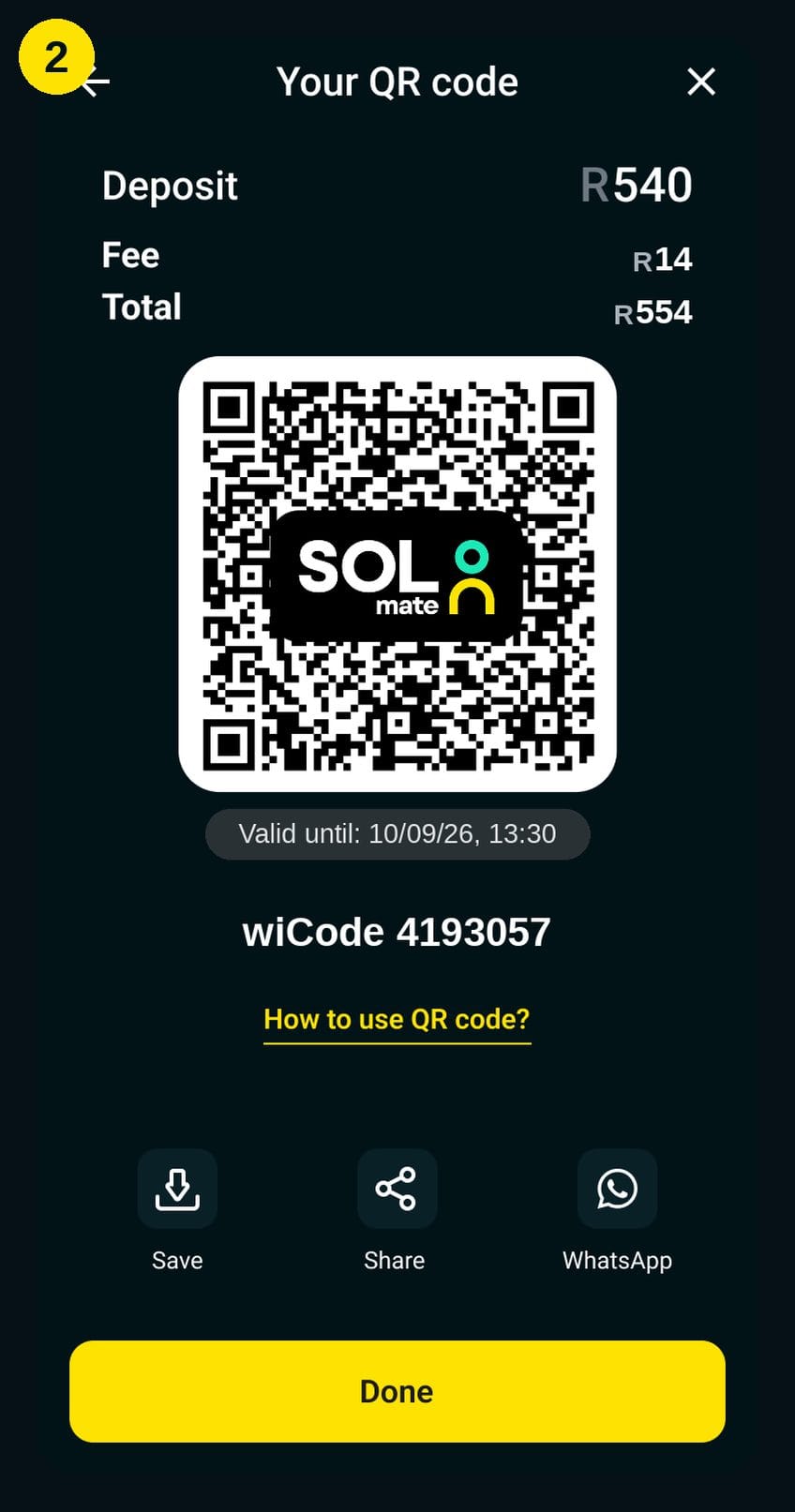
The fee is 1.75% of the amount with a minimum of R14, which is why regulars deposit less often and in bigger amounts rather than topping up R50 at a time. Cash can also go in at ATMs (R6 plus R1.50 per R100 or part thereof) and through Pay@ retailer counters, where fees vary by retailer — the fee page lists them. Together with the withdrawal routes above, that closes the loop: cash in, hold it safely, cash out — no plastic anywhere in the chain.
What If Your Code or PIN Expires?
This is the question behind a surprising share of "cardless withdrawal" searches, and the answer is reassuring: an expired code is a non-event. The code was only ever a key. If it's not used in time, the door simply closes again and the money is exactly where it was.
- Till code (wiCode): expires after one hour; your balance is untouched. Generate a fresh one when you're actually at the till.
- Voucher to a phone (Ewallet): valid 30 days; after that the full amount is refunded to the sender automatically. The sender can also cancel an unredeemed voucher through support. Expiry windows differ between providers — how long an eWallet takes to expire covers the details.
- Bank cardless PIN: each bank sets its own validity window; once it lapses, the funds return to (or never leave) the account. Check the exact rule in your bank's app — and don't accept a "reactivation" offer from anyone who phones you about it.
The one scenario to take seriously is the opposite: a code that was used but not by you. That only happens if the code left your phone — which is what the safety habits further down are about.
SASSA Grants Without a Card
Grant recipients search "withdraw money without a card" more than anyone else, so it's worth being clear: SASSA grants have their own collection rules, and they change. Collection is handled through SASSA's and its paying bank's official channels — including cash collection at partner retailers with identity verification — and the current requirements for card replacement, biometric verification and retail collection are published on sassa.gov.za.
Two practical rules. First, confirm the current process on the official site or at the retailer's money desk, not from third-party guides — including this one. Second, never hand your SASSA card, PIN or ID to anyone offering to "help you withdraw". No official channel requires a helper. If you're building a cash routine around a grant, the till-code and voucher routes above are general-purpose tools, not grant collection channels.
What Cardless Cash Actually Costs
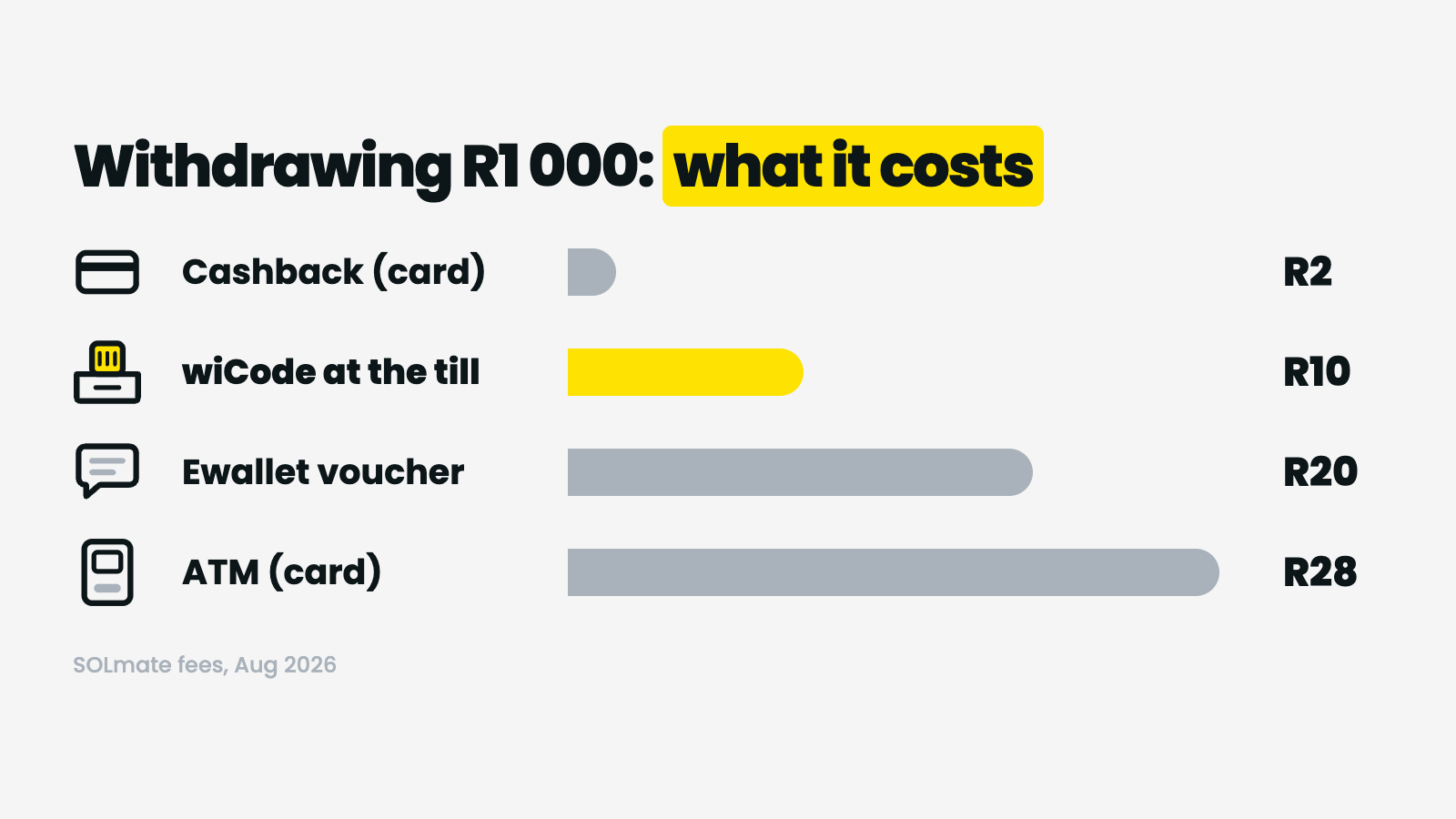
Using SOLmate's own published fees as a worked example of how the maths differs by route:
| Way to get cash | Fee | Cost on R1,000 |
|---|---|---|
| wiCode withdrawal at the till (no card) | R10 flat | R10 |
| Ewallet voucher to another person (no card on their side) | R20 flat | R20 |
| Cashback at a retailer (with card) | R2 | R2 |
| ATM withdrawal (with card) | R2.80 per R100 | R28 |
The pattern generalises across providers: till points charge flat, ATMs charge per hundred — so the bigger the withdrawal, the harder the till wins. Fees above are from the public SOLmate fee table; the account's combined caps are R10,000 a day and R25,000 a month, with Ewallets capped at R4,000 a day, all on the limits page. For how banks structure their own withdrawal fees — and why "free" accounts rarely are — see bank charges in South Africa explained.
Cardless vs Card: When You Still Want the Plastic
Cardless doesn't mean anti-card. The table above shows the one place plastic wins outright: cashback at a retailer till — the cheapest way to get cash there is — needs a card, and so does tapping to pay in-store (swipes are free on the SOLmate card). If you take cash out often and in small amounts, or you pay by card daily, a physical card earns its keep.
The point is that it's a choice, not a precondition. With SOLmate the account works on its own for R10.00 a month; adding the debit card moves you to the R29.00 plan with a once-off activation from R49.00 (priced by risk profile and delivery address). Ordering happens inside the app under Card, and while you wait for delivery, Route 1 keeps working. Lost the card later? Same answer — the app doesn't stop. If you don't have the account yet, opening one online takes a few minutes and no branch visit.
Keeping Code Cash Safe: Four Habits
- Generate the code at the till, not at home. A code is cash for one hour — the shorter its life in your notifications, the better.
- Never share a code, voucher PIN or OTP. Anyone holding it can collect your money. No provider, employer, "agent" or helpful stranger has a legitimate reason to ask for it.
- Treat an expired code as a non-event. The money never left the account. Scammers exploit panic — "your withdrawal failed, give me the new code" — and calm people don't fall for it.
- Cash out vouchers in a busy shop, not a quiet ATM. A till inside a supermarket has cameras, staff and other people; it's usually the safer place to be holding cash.
Where SOLmate Fits
Put the routes together and something bigger emerges: you can run an entire cash life — get paid, hold money safely, take out what you need at the shop downstairs, send cash to a relative's phone — without ever owning a plastic card or standing in a bank queue. That is what a digital wallet is for.
The SOLmate account behind all of this opens in about 3 minutes with a South African ID, passport or asylum permit, entirely in the app, and runs on the R10.00-a-month plan with no card at all. The card becomes what it always should have been: optional.
Frequently Asked Questions
How do I withdraw money without a bank card in South Africa?
Generate a one-time withdrawal code in your wallet or banking app and cash it at a supermarket till; use your bank's cardless service at its own ATMs; or receive money as a voucher on your cellphone number and cash it out with the PIN from the SMS. All three need only a phone.
Can I withdraw money without a card at Shoprite, Checkers or Pick n Pay?
Yes. Generate a wiCode in the SOLmate app (Send Money → wiCode Withdrawal), show it at the till at Shoprite, Checkers, Usave or Pick n Pay and collect your cash. Flat R10 fee, code valid for one hour.
Can I do a cardless withdrawal at any ATM?
Usually not. A bank's cardless PIN normally works only at that bank's own ATMs. Supermarket till codes aren't tied to a bank, which makes them the practical option when there's no ATM of your bank nearby.
What happens if my cardless withdrawal PIN or code expires?
Nothing happens to your money — it stays in the account it came from. Generate a new code when you're ready. A wiCode expires after one hour; an Ewallet voucher after 30 days, when the amount is refunded to the sender; bank PIN windows vary by bank.
Can I have a bank account without a card?
Yes. A digital wallet such as SOLmate is opened and used entirely in the app, and the account works without a physical card on the R10.00-a-month plan. You can order a debit card later if you want cashback or in-store swipes.
Can someone without any account get cash from me?
Yes — send an Ewallet voucher to their South African cellphone number. They receive an SMS with a voucher number and PIN and cash it at listed retailers or Nedbank ATMs. No card, app or account is needed on their side.
How do I deposit cash without a card?
Generate a wiCode deposit code in the app (Top up → wiCode Deposit) and hand the cash with the code at a Shoprite, Checkers or Usave till. The deposit reflects instantly; the fee is 1.75% with a minimum of R14.
Is the till cheaper than the ATM?
Usually, and increasingly so on bigger amounts: flat R10 at the till versus per-R100 pricing at ATMs — R1,000 out costs R10 versus R28 on SOLmate's own fee table. Cashback with a card is cheaper still, at R2.
Can I withdraw my SASSA grant without a card?
SASSA has its own official channels for grant collection, including retail collection with identity verification, and the rules change. Verify the current process on sassa.gov.za or at the retailer's money desk — and never hand your card, PIN or ID to a "helper".
Do I need a card to open a SOLmate account?
No. The account opens in the app in about 3 minutes with a South African ID, passport or asylum permit. The card is a separate, optional order.
Sources: SOLmate wiCode help page, SOLmate Ewallet help page, SOLmate fees, SOLmate limits, SOLmate card ordering, SASSA official site. Fees, retailer lists and limits correct as of September 2026 — always check live fees in the app. Bank cardless services are described in general terms only; check your own bank's app for its exact process and pricing. SOLmate is not a bank. SOLmate (SOL Ecosystem (Pty) Ltd) is an authorised financial services provider (FSP No. 52248) and registered credit provider (NCRCP16037).