How to Choose a Money Transfer App in South Africa (2026)
There is no single "best" money transfer app — but there are six checks that separate a good one from an expensive mistake: licence, upfront quote, fee model, payout methods, documents and support. Here's the full checklist.

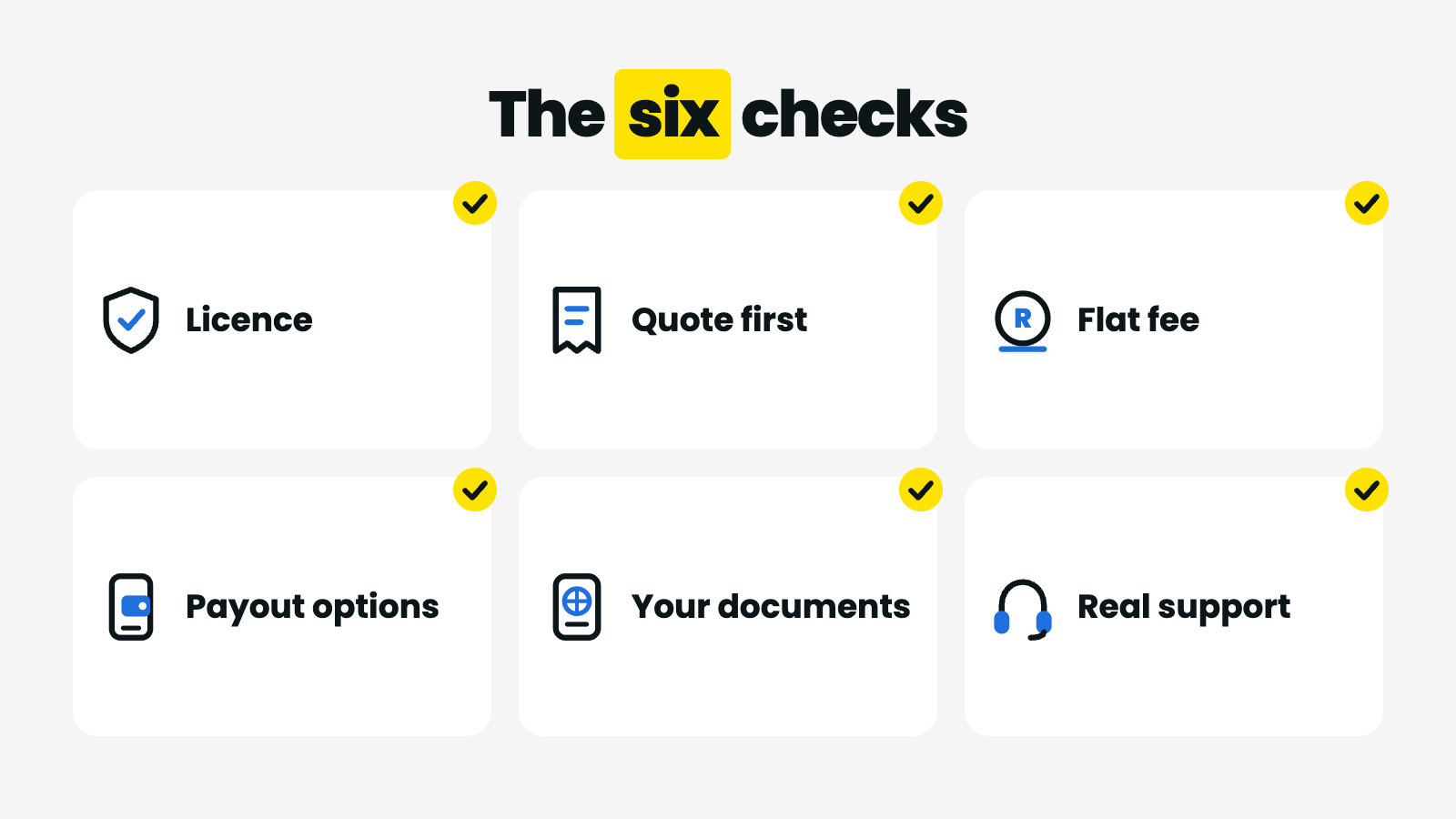
Quick answer: there is no single "best" money transfer app in South Africa — anyone who tells you otherwise is selling something. What exists is a short list of checks that separate a good app from an expensive mistake: a verifiable licence, a full quote before you pay, a flat fee, payout methods your family can actually use, documents you actually have, and support you can reach. Run all six below in five minutes, on any app, and you'll know.
Why the "Best App" Question Is the Wrong Question
Transfer costs change corridor by corridor: the app that's cheapest to one country can be mediocre to another, and payout options that suit a recipient in a big city may be useless in a rural area. That's why this guide gives you no rankings — it gives you the test. Apply it to whatever app you're considering, and if you're still weighing up how to send rather than which app, start with the cheapest way to send money from South Africa — it covers the channels themselves.
The Six Checks
1. A licence you can verify — not just a promise
A legitimate provider operates under South African exchange-control and FICA rules and displays its FSP (Financial Services Provider) number publicly — usually in the website footer. Take that number and check it on the FSCA register. Takes two minutes, filters out 90% of trouble. No FSP number anywhere? Close the app.
2. The full quote before you pay
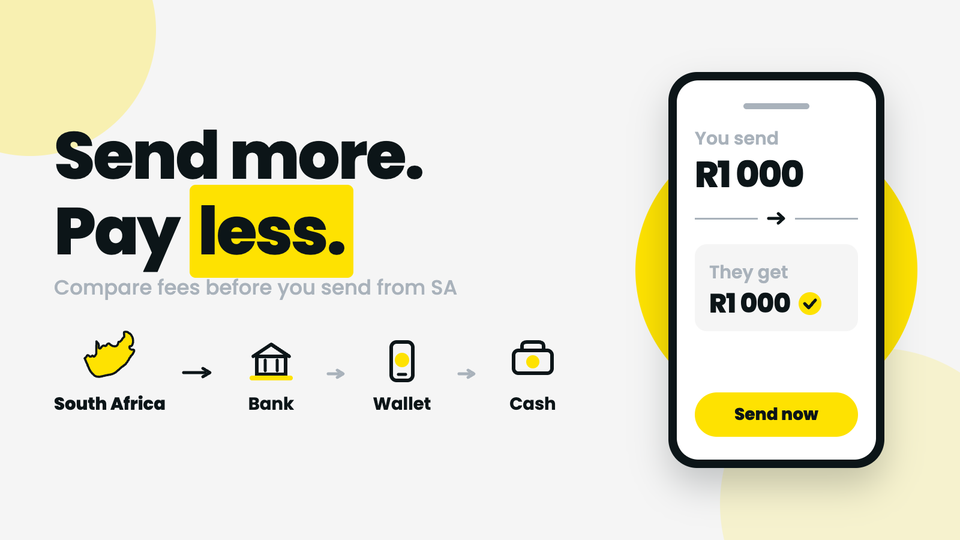
The single most honest thing an app can show you is one screen with three numbers before you confirm: the fee, the exchange rate, and the exact amount your recipient gets. If any of those appears only after payment — or never — the cost is hiding in the rate. The amount received is the only number that can't lie.
3. A flat fee, not a percentage
A 5% fee on R5,000 is R250; a flat fee stays flat whether you send R1,000 or R10,000. Above roughly R1,000 per transfer, flat almost always wins — and if you send money home every month, the difference compounds into thousands of rand a year. Check the fee model on the provider's public fee page; ours is published in full here as an example of what full disclosure should look like.
4. Payout methods your family can actually use
The app is only half the transfer — the other half is how the money lands. Mobile-wallet payout (EcoCash, M-Pesa and similar) is usually fastest and cheapest; cash pickup suits recipients without smartphones; bank deposit works where accounts exist. A good app shows you all available methods with a live quote per corridor — see how that looks on the Zimbabwe corridor page. If the destination your family uses isn't supported, the app fails the test no matter how cheap it is.
5. Documents you actually have
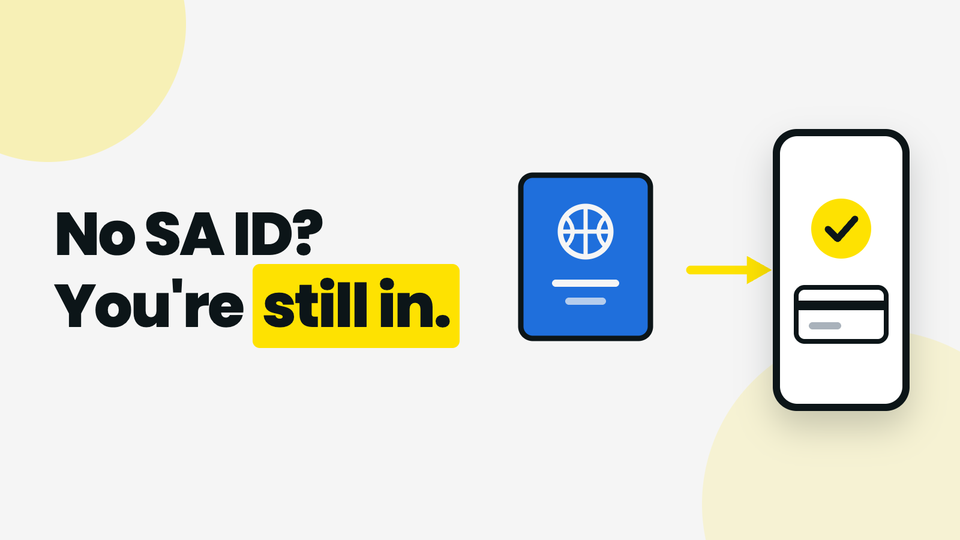
An app that demands an SA ID, proof of address and a payslip is useless to most of the people who need it most. The right question: does it accept a foreign passport or valid asylum documentation, with verification done in-app rather than at a branch? If yes, you can be sending money the same day you download it.
6. A reference number and a human you can reach
Every transfer should produce a tracking reference, and there should be a real support channel — WhatsApp, chat, a phone number — answering when something goes sideways. Test it before you need it: send support a question and see how long the answer takes. How the transfer itself works step-by-step is also worth reading upfront — here's how an international transfer runs in-app.
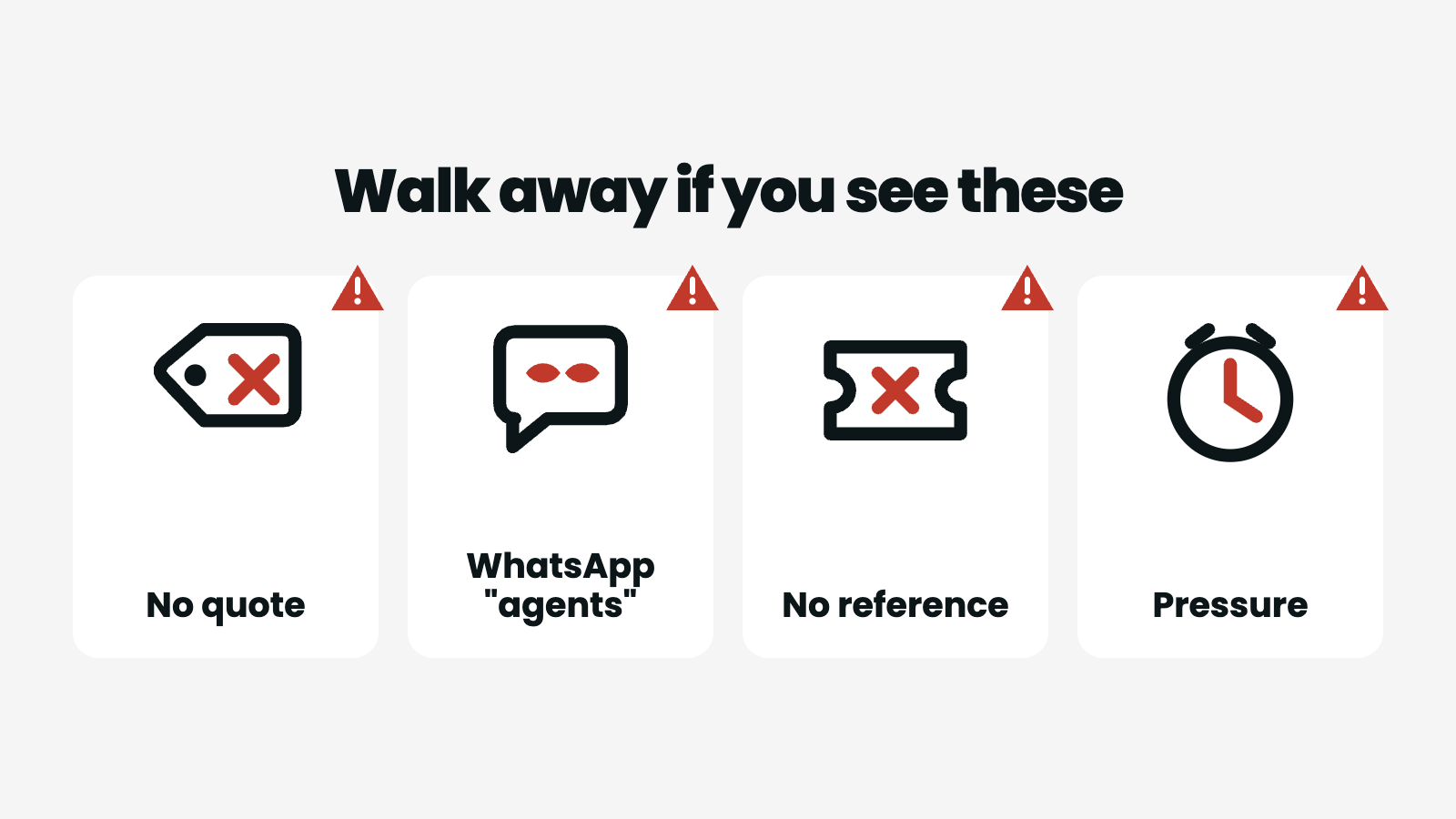
Four Red Flags That End the Conversation
- No quote until after you pay. The cost is in the rate, and it isn't small.
- "Agents" in WhatsApp groups or on social media offering better rates than any app. No licence, no receipt, no recourse — this is how money disappears.
- No tracking reference. If the transfer has no number, it officially doesn't exist.
- Pressure to hurry. Legitimate providers never rush you; the quote will still be there in ten minutes.
The Five-Minute Test, Start to Finish
- Find the FSP number in the footer → verify it on the FSCA register.
- Request a quote for R1,000 to your corridor → all three numbers shown before payment?
- Check the fee model → flat or percentage?
- Open the payout options → is the method your family uses on the list?
- Check the document requirements → do you qualify with what's in your pocket?
Any app that passes all five is worth a first small transfer. Judge the rest on that experience: how fast it arrived, what your family actually received, and how support behaved.
Frequently Asked Questions
What is the best money transfer app in South Africa?
There's no single best — costs and payout options differ by corridor. Run the six checks above; the fair comparison between any two apps is the amount your recipient receives for the same rand amount on the same day.
Are money transfer apps safe?
Licensed ones are regulated financial providers with verifiable FSP numbers and tracked transfers. The danger is unlicensed "agents" and informal channels — no licence means no protection.
Can I use a transfer app without a bank account?
Yes — licensed wallet apps open with an SA ID, foreign passport or valid asylum documentation, no bank account or work permit needed.
Which app has the lowest fees?
Depends on corridor and amount. Flat fees beat percentages above ~R1,000, and mobile-wallet payout is usually the cheapest delivery. Always compare the amount received, not the headline fee.
What documents do I need?
One identity document (SA ID, foreign passport, or valid Section 22 asylum documentation) plus a selfie for the in-app FICA check. Proof of source of funds may be requested for larger amounts.
Sources: Financial Sector Conduct Authority (FSCA). Details correct as of August 2026; always confirm live fees and rates in the app before sending.