eWallet Limits in South Africa: How Much You Can Send, Hold and Withdraw (2026)
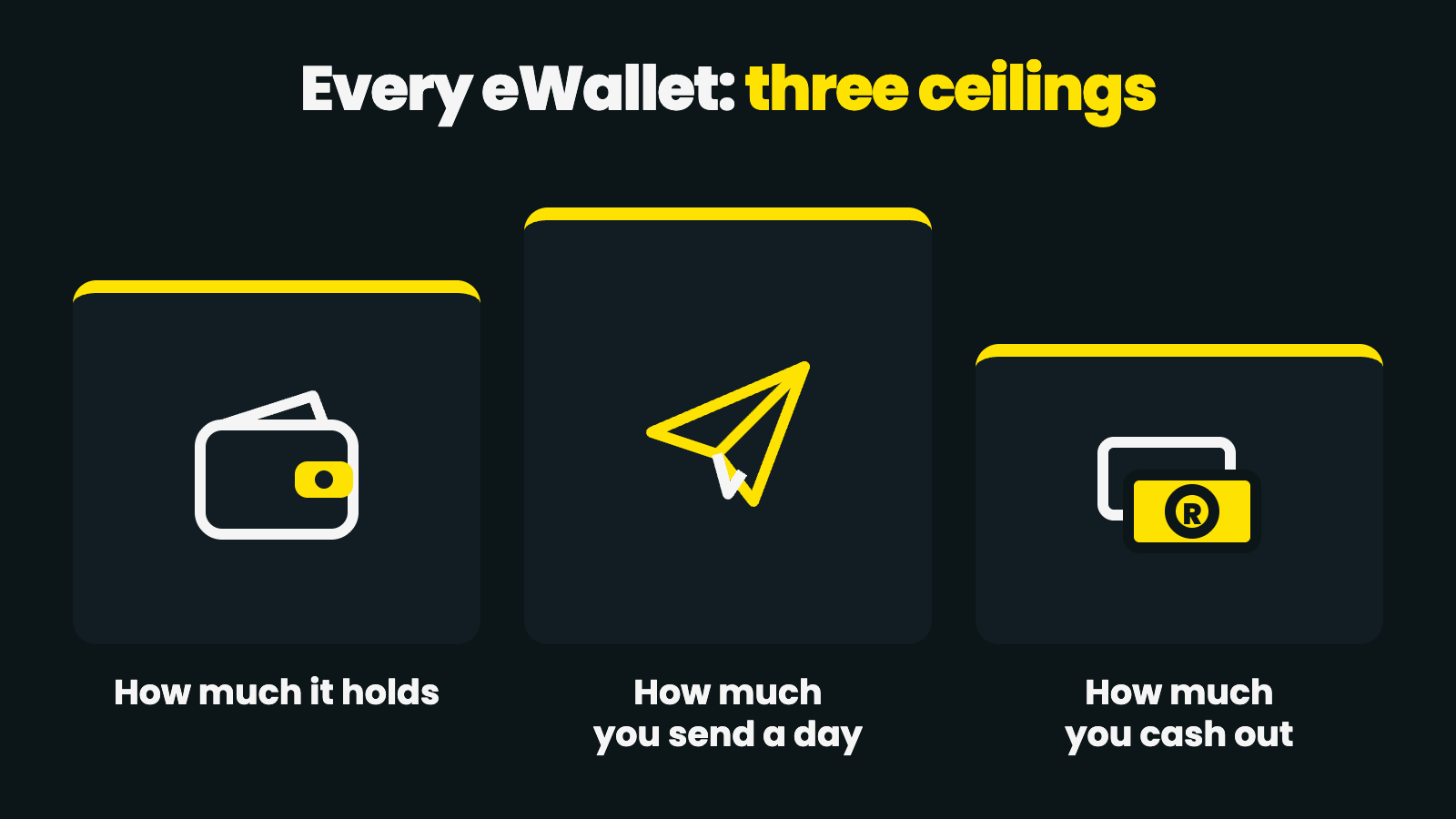
Every eWallet has three ceilings: how much it can hold, how much you can send per day, and how much cash comes out. Here are the actual numbers — bank voucher limits and wallet account limits — in one place, with what to do when you hit them.

Every eWallet in South Africa runs on three ceilings — how much it can hold, how much you can send per day, and how much comes out per transaction. The headline numbers: FNB's eWallet holds a maximum of R14,000, with send limits from R1,500 to R15,000 per day depending on the channel; a SOLmate Ewallet transfer is capped at R4,000 a day and R25,000 a month inside the wallet's overall limits. Full tables below, plus what to do when a limit blocks you.
First, Which "eWallet Limit" Are You Looking For?
People search this phrase meaning two different things, and the numbers differ completely. If someone sent money to your phone number and you're cashing it out, you're dealing with voucher limits — the sending bank's rules. If you have your own wallet app and you're sending money out of it, you're dealing with account limits — your provider's daily and monthly caps. This guide covers both; if you first want the mechanics of how these transfers work at all, start with how an eWallet works in South Africa and come back for the numbers.
FNB eWallet Limits (Official Figures)
FNB runs South Africa's largest send-to-cellphone service, so its published limits are the reference point most people are actually asking about:
| FNB eWallet limit | Amount |
|---|---|
| Maximum eWallet balance | R14,000 |
| Max send per day — FNB App | R15,000 |
| Max send per day — online banking | R3,000 |
| Max send per day — WhatsApp | R3,000 |
| Max send per day — cellphone banking (USSD) | R1,500 |
| Cash-out OTP validity | 16 hours |
| Reversal window | 72 hours, max 3 reversals/month (fee applies) |
Two details worth noting from FNB's own FAQ: anti-fraud systems can reduce these limits or block a transfer entirely if a transaction looks suspicious, and reversals are charged and not guaranteed. The numbers are current per FNB's official eWallet page — always confirm there before a large transfer.
SOLmate Ewallet Limits
SOLmate's Ewallet is the send-to-any-SA-number tool inside the wallet, and its caps sit within the account's overall limits:
| SOLmate limit | Per day | Per month |
|---|---|---|
| Ewallet transfers | R4,000 | R25,000 |
| Overall wallet (all services combined) | R10,000 | R25,000 |
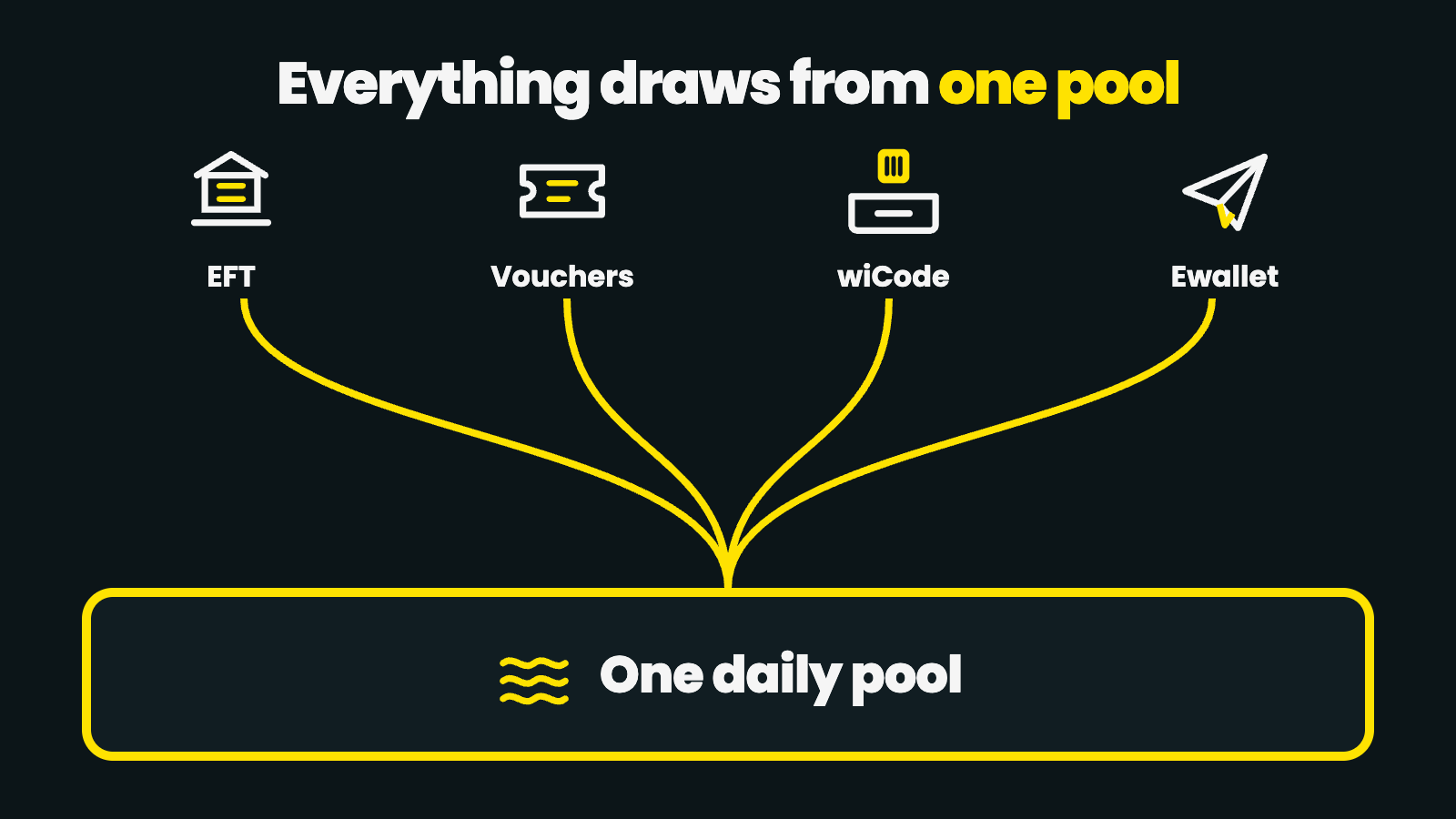
The overall cap is the one that catches people out: EFTs, vouchers, wiCode and Ewallet transfers all draw from the same R10,000-a-day pool, so a busy day of transactions can block an Ewallet send even though the Ewallet's own limit isn't reached. Limits are risk-profile dependent — the exact figures for your account are on the limits page and confirmed in-app before each transfer.
The Caps Are the Price of a 3-Minute Sign-Up
None of this is arbitrary. South Africa's FICA framework requires financial providers to match transaction capacity to how thoroughly a customer is verified: lighter sign-up, lower ceilings. That's the deal that makes 3-minute, no-paperwork accounts legal in the first place. It's also why limits are "risk-profile dependent", and why anti-fraud systems sometimes tighten them temporarily without warning.
Blocked by a Limit? Run This Checklist
- Which cap did you hit? Daily limits reset tomorrow; monthly limits reset with the calendar month. A blocked R500 transfer late in the month usually means the monthly pool is empty, not a broken app.
- Check the combined pool, not just the service. On wallet accounts, the day's EFTs and voucher purchases count against the same total.
- Don't split one payment into many small ones to dodge a cap. Structuring transfers to avoid limits is exactly the pattern anti-fraud systems hunt for — it gets accounts frozen, not helped.
- Regularly hitting the ceiling? That's the signal you've outgrown voucher-sized transfers. An EFT from a real account number moves bigger amounts than any eWallet — and if the recipient needs cash without a card, till-point withdrawal routes handle the last mile.
Can You Raise an eWallet Limit?
Mostly no, and it helps to know which part is fixed. A published cap is not a setting you can switch in an app: neither FNB's eWallet page nor SOLmate's limits page describes a way to request a higher one. What you can change is the route the money takes.
- Sending from FNB? Change the channel. The same sender can move R1,500 a day by cellphone banking, R3,000 by online banking or WhatsApp, and R15,000 in the FNB App. Moving from USSD to the app is a tenfold jump with no paperwork.
- Receiving on an FNB eWallet? Make room first. The wallet holds R14,000 at most, so cashing out part of the balance is what makes space for the next transfer.
- On SOLmate? Trust the figure in the app. Limits are risk-profile dependent, so the number that applies to your account is the one the app confirms before you complete a transfer. If it is lower than you expected, support can tell you what applies to you: use the Support tab in the app or WhatsApp, from your registered mobile number.
If none of that is enough, the amount has outgrown vouchers, and point 4 of the checklist above is the real answer.
Don't Confuse Limits With Timers
A limit is how much; a timer is how long. Voucher money also expires — unclaimed transfers go back to the sender after roughly two weeks at FNB and 30 days for a SOLmate Ewallet, and cash-out PINs die in hours. If your problem is "the money disappeared" rather than "the transfer was blocked", you want the eWallet expiry guide instead.
When Limits Stop Being Your Problem
Voucher limits exist because vouchers are designed for occasional cash gifts, not for running a financial life. If you're pushing against R4,000-a-day ceilings every week — receiving wages, supporting family, paying rent — the answer isn't a bigger voucher, it's an account with a real account number: EFTs in and out, a Mastercard, and transfers sized for real life. It opens with a passport, SA ID or asylum permit, and the only queue involved is the one you stop standing in.
Sources: FNB eWallet official page, SOLmate limits. FNB figures as published in August 2026 and re-checked on FNB's page on 1 October 2026; providers change limits without notice, so always check the live figures before transferring. Facts re-checked against SOLmate product pages (/help/solmate-limits, /help/what-is-ewallet, /fees, /open-account) on 1 October 2026. The section on raising limits was added on 3 October 2026 from the same FNB and SOLmate pages plus /help/contact-support. SOLmate is not a bank. SOLmate (SOL Ecosystem (Pty) Ltd) is an authorised financial services provider (FSP No. 52248) and registered credit provider (NCRCP16037).