How Does an eWallet Work in South Africa? (Complete 2026 Guide)
Money sent to a cellphone number, cash out at a till without a card or bank account — that's an eWallet. Here's the full mechanics: how sending works, where the cash comes out, what the timers mean, and what an eWallet can never do.
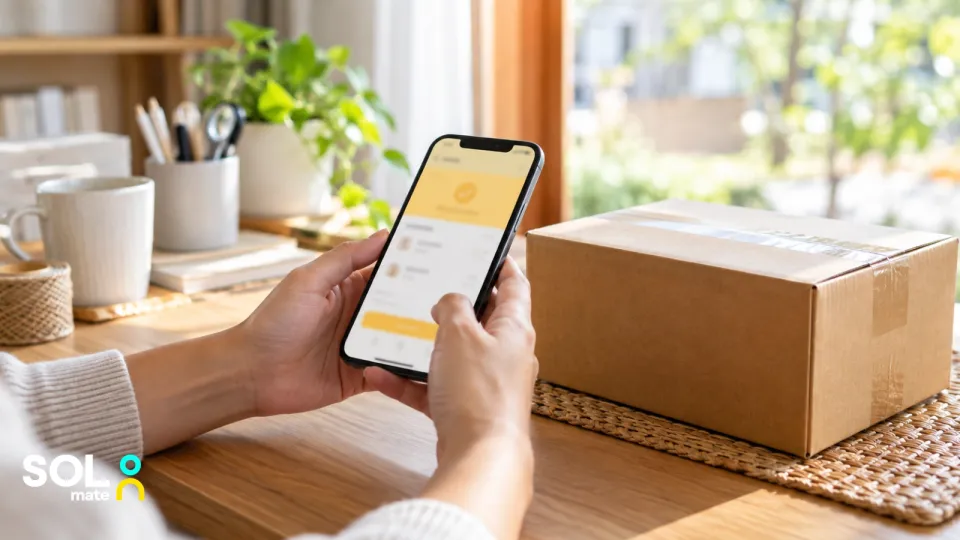
An eWallet is South Africa's way of sending cash to a person instead of an account. The sender transfers money from their app to any valid SA cellphone number; the recipient gets an SMS, dials a USSD code to generate a one-time PIN, and takes cash out at an ATM or a supermarket till — no bank account, no card, no paperwork. The catch: the money is a temporary voucher, not a balance, and it runs on timers. Below: both sides of the transfer, the two timers, the fees, and the point at which a voucher stops being enough.
What an eWallet Actually Is (and Isn't)
Strictly speaking, "eWallet" is FNB's send-money product — but South Africans have turned it into the generic word for every send-to-cellphone service, the way "Google" became a verb. Other banks run similar services under their own names, and licensed wallets like SOLmate have their own version. The mechanics below apply to the whole family.
The key mental model: an eWallet is a voucher tied to a phone number, not an account. There's no account number, no card, and the money doesn't live there permanently — unclaimed transfers eventually return to the sender. We've broken down those timers in detail in how long an eWallet takes to expire; this guide covers everything else.
Sending: A Number, an Amount, a Double-Check
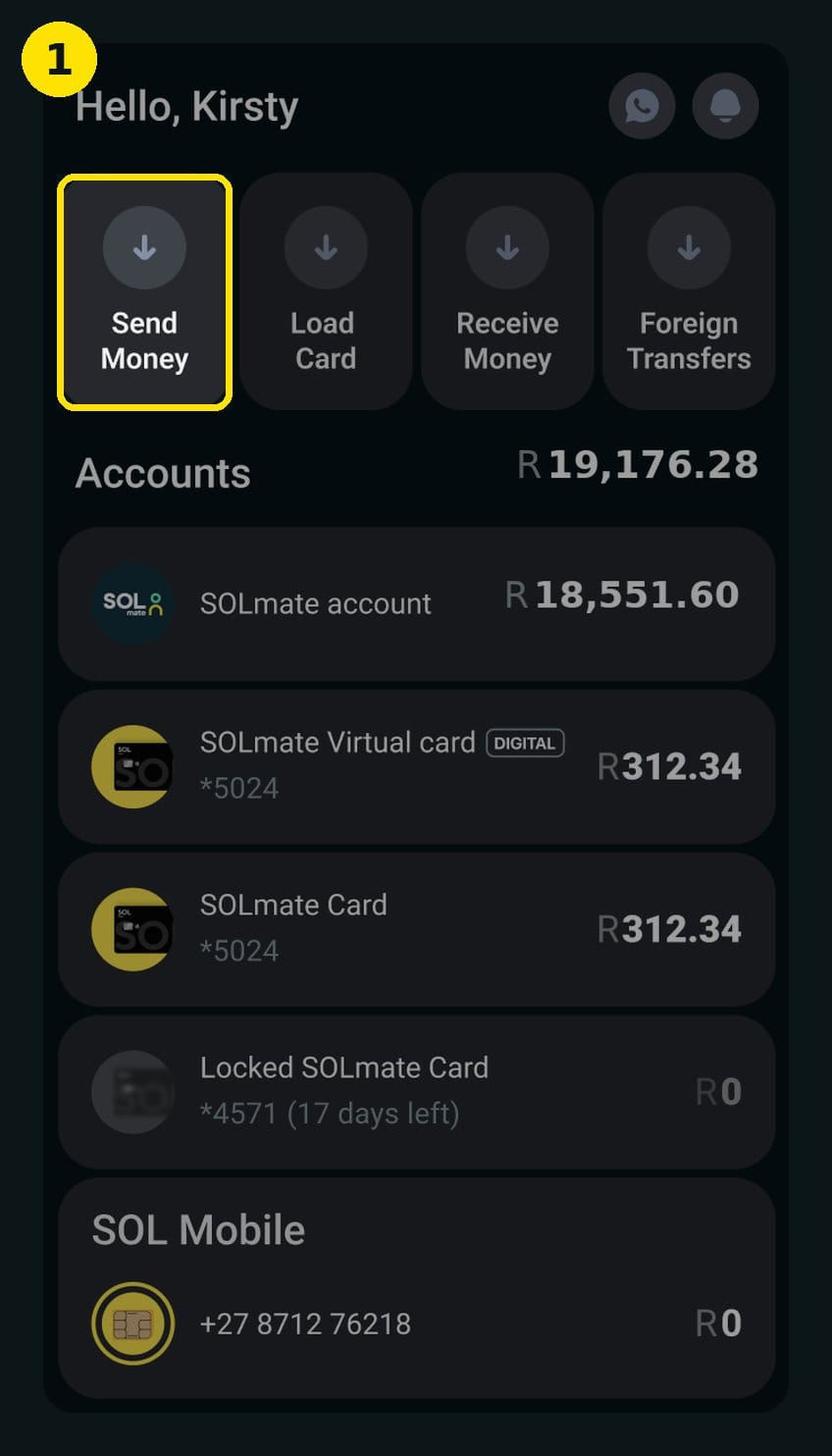
- Open your banking app or wallet and choose the send-money / eWallet option.
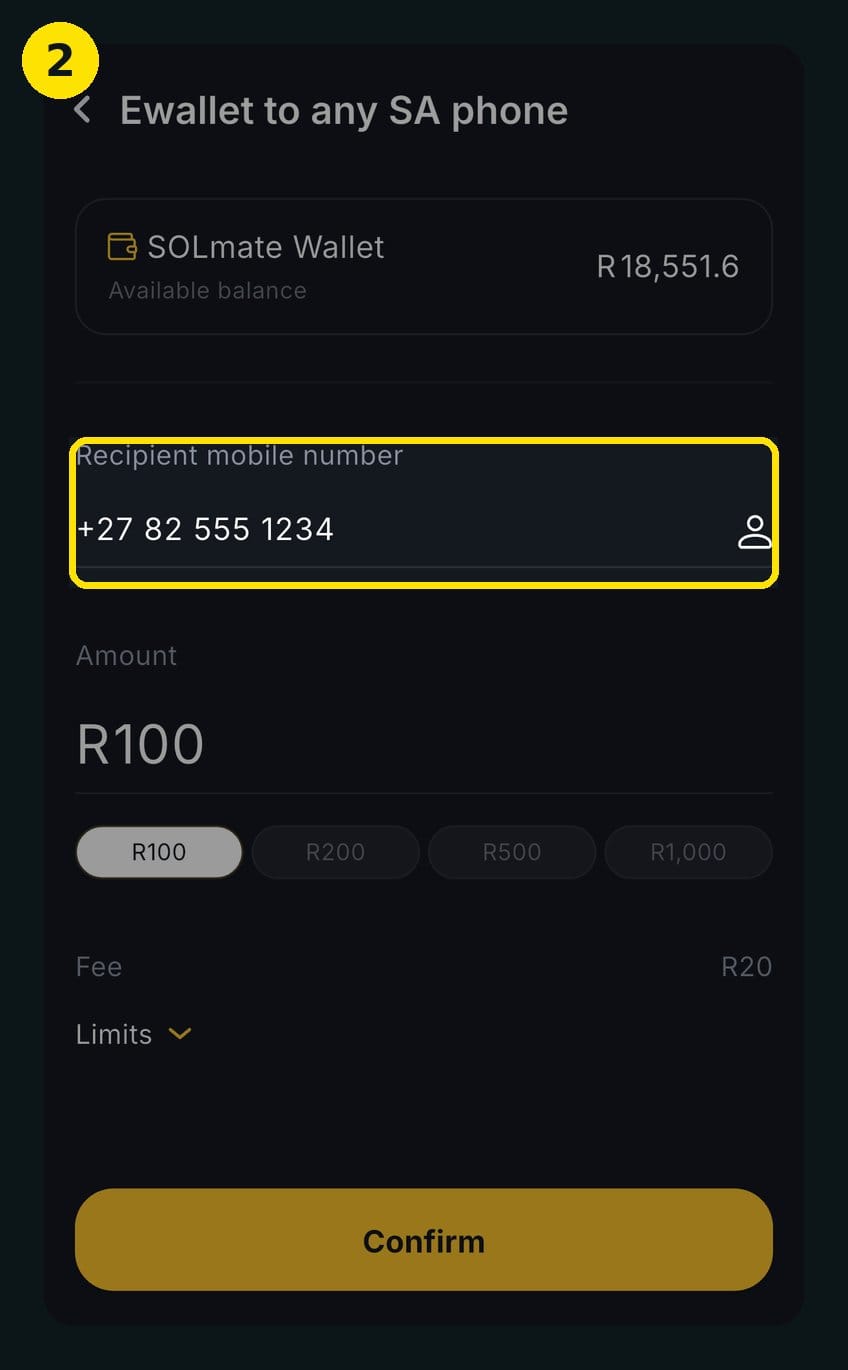
- Enter the recipient's cellphone number. That number is the destination — there's no account to look up. (Wondering what an "eWallet number" is? It's just the phone number — nothing to register.)
- Enter the amount and confirm. The fee is charged to you as the sender and varies by provider; per-transfer limits apply.
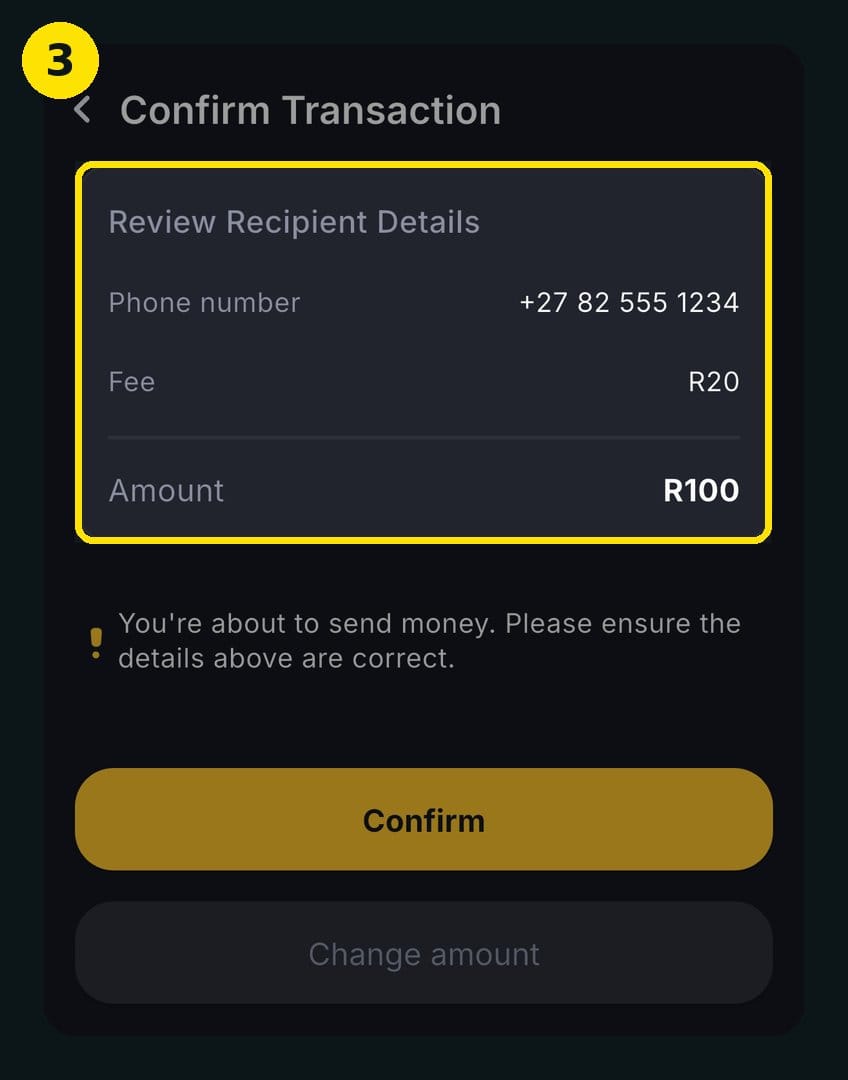
- Double-check the number before you press send. This is the single most important habit: a transfer to a wrong number can be spent by a stranger, and reversals are limited, fee-carrying and not guaranteed.
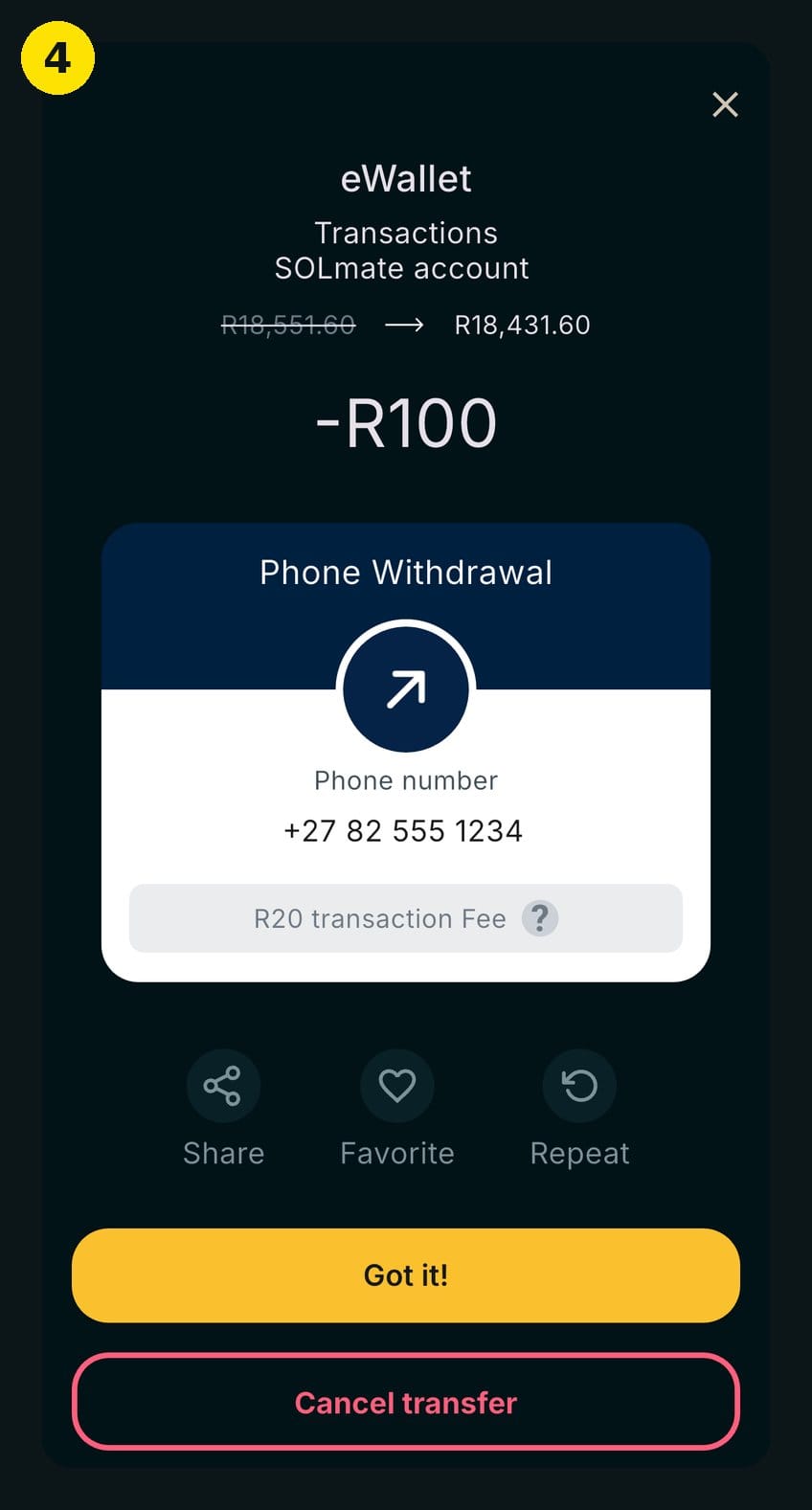
Delivery is near-instant — the recipient's SMS typically arrives within minutes.
Receiving: One SMS, One Code, Cash at the Till
- The SMS arrives, confirming money is waiting against your number.
- Dial the USSD code from that phone. For FNB it's *120*277# (or *130*277# if you have no airtime — same menu, and it doubles as the way to verify a suspicious eWallet SMS is real).
- Generate a one-time cash-out PIN from the menu. The PIN is short-lived by design — if it lapses, the money stays put; just make a new one.
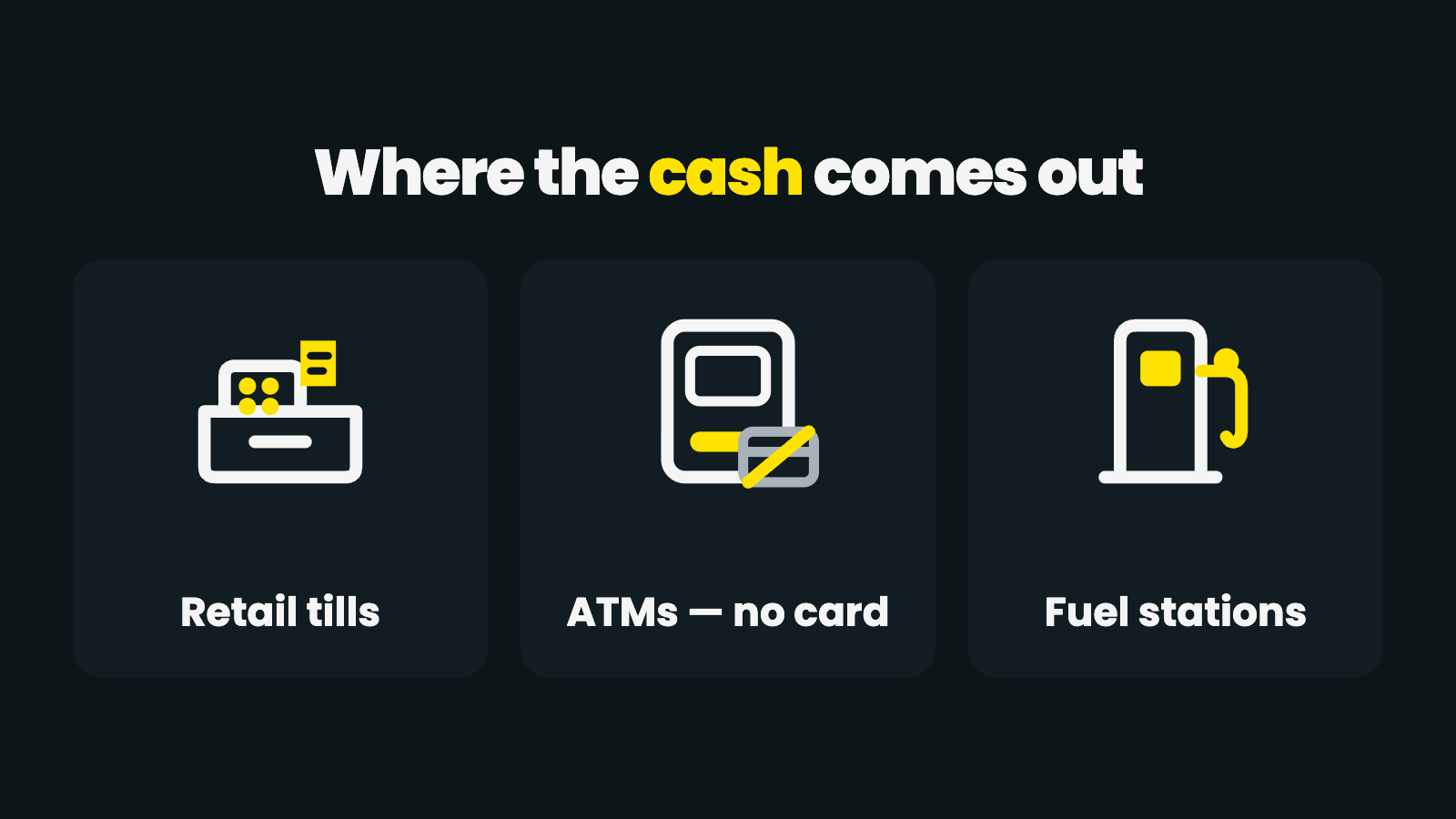
- Take the cash out. At an ATM (no card needed — the PIN does the work) or at supermarket tills: Pick n Pay, Checkers, Shoprite, Usave, PEP and Ackermans all handle eWallet withdrawals, and forecourts like Shell, Sasol, Engen and TotalEnergies accept eWallet payments for fuel.
No bank account is created, no documents are asked for, and the recipient never visits a branch. That accessibility is why the model took over South Africa — and why so many workers are paid this way every month. Every step on the receiving side, including an expired PIN, a lost SMS or no airtime, is in our guide to withdrawing eWallet money. If what you want is cash from your own balance rather than a voucher, that is a different set of routes: how to withdraw money without a card.
The Two Timers Everyone Confuses
Every eWallet runs on two independent clocks, and mixing them up causes most of the panic online:
- The money's clock. Unclaimed transfers return to the sender after a set window — roughly two weeks for FNB, 30 days for a SOLmate Ewallet. Nothing is lost; it just goes back where it came from.
- The PIN's clock. The one-time cash-out PIN dies in hours (16 for FNB). An expired PIN affects nothing — regenerate and carry on.
If a PIN "stopped working", your money is fine. If the whole transfer sat untouched past its window, ask the sender to resend.
Fees and Limits, in One Paragraph
The sender pays a per-transfer fee (each provider publishes its own; SOLmate's Ewallet voucher is a flat R20), and every service caps how much can sit against one number and how much can be sent per day or per channel. The pattern worth knowing: occasional transfers are cheap; using eWallets as a monthly payment routine is not — the fees stack, and the expiry windows add friction every payday. The exact caps per service, per day and per number are in our eWallet limits guide.
Staying Safe: The Three Rules
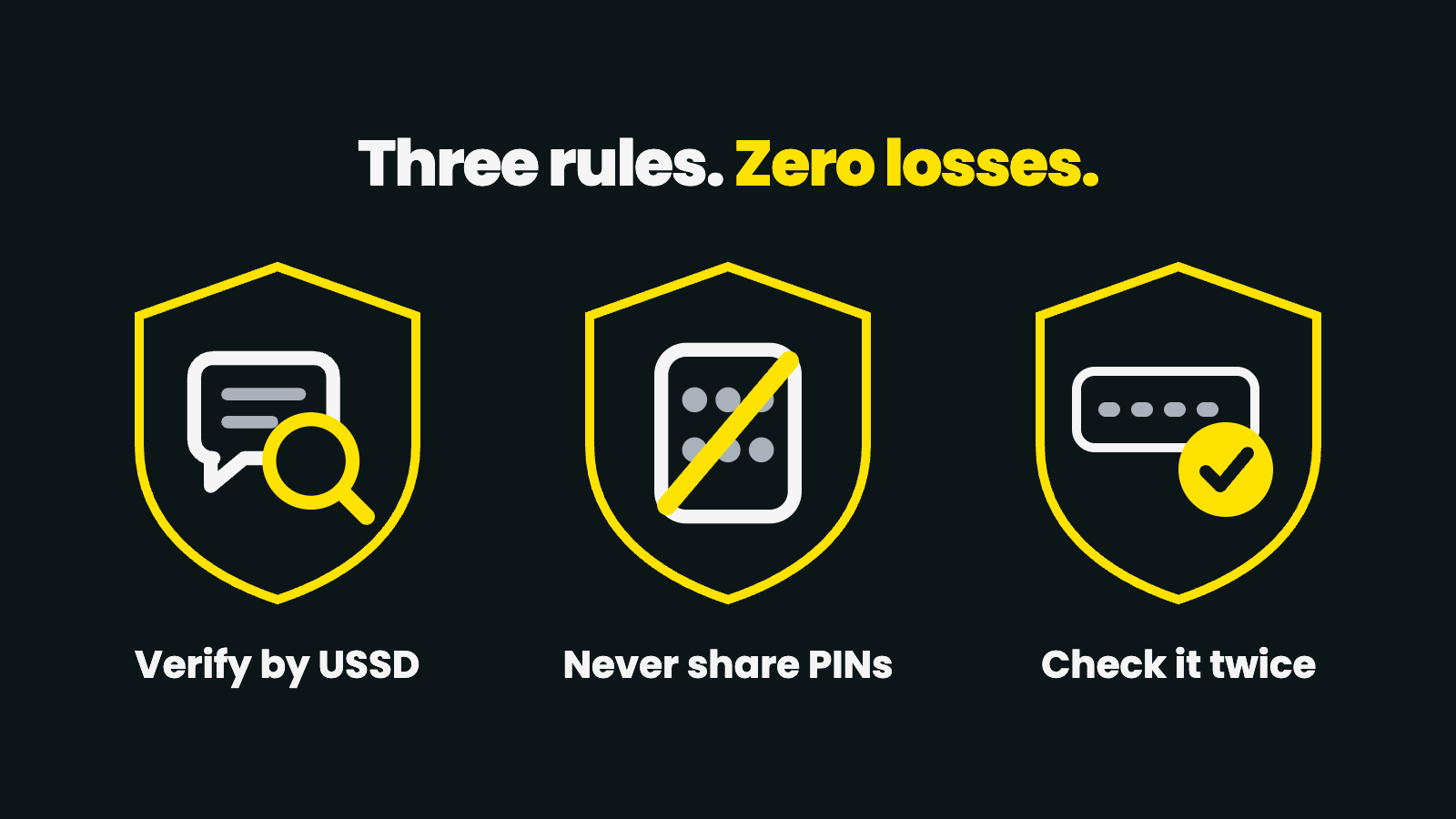
- Verify, don't trust the SMS. Fake "eWallet received" messages are a standard scam, often used as fake proof of payment. Check the balance yourself via the USSD code before releasing any goods.
- Never share a PIN or OTP — with anyone, for any reason. No legitimate provider asks for it.
- Treat the phone number like an account number. Confirm it digit by digit before sending; wrong-number recoveries are not guaranteed.
Read next in the Ewallet series
- How to withdraw eWallet money – code, PIN, ATM and till, step by step
- What is an eWallet number – which number to give the sender and what it cannot do
- eWallet limits – how much can sit against a number and be sent per day
- How long an eWallet takes to expire – the PIN clock and the money clock
- Withdrawing money without a card – for your own balance, not a voucher
The SOLmate Version — and When You've Outgrown Vouchers
SOLmate's own Ewallet works on the same logic — send from your wallet to any SA cellphone number — with two differences worth knowing: the voucher stays valid a full 30 days, and an unredeemed transfer can be cancelled by the sender (through the in-app support chat) before anyone collects it. The recipient's SMS lists where to cash out — Nedbank ATMs, Pick n Pay, Shoprite, Checkers, Boxer and Kazang-enabled stores — and the flat R20 fee is paid by the sender, not the recipient. For cash from your own SOLmate balance rather than a voucher, the tool is a wiCode.
The honest graduation test: if you receive money this way every month — wages, support from family — you've outgrown vouchers. Expiry deadlines, PIN queues and per-transfer fees are the cost of not having an account. A licensed wallet account gives you a real account number that takes your salary by normal EFT, a Mastercard for spending, and a balance with no clock on it — and it opens with a passport or asylum permit, no SA ID or work permit needed. Vouchers are for sending cash to a person. Accounts are for being paid like everyone else.
eWallet FAQ
What is an eWallet?
A way to send cash to a South African cellphone number instead of a bank account. The money waits against the number as a temporary voucher until the recipient cashes it out.
How does an eWallet work?
The sender pays from their app to your cellphone number. You get an SMS, dial the USSD code (for FNB, *120*277#), generate a one-time PIN and take the cash at an ATM or a supermarket till.
Do I need a bank account to receive an eWallet?
No. A valid South African cellphone number is all the recipient needs. No account, no card, no documents.
How long does an eWallet last?
The cash-out PIN lasts hours; the money itself lasts weeks (about two weeks at FNB, 30 days for a SOLmate Ewallet) and then returns to the sender if unclaimed.
Who pays the eWallet fee?
The sender, per transfer. Each provider sets its own fee; a SOLmate Ewallet is a flat R20. The recipient pays nothing to collect.
Is eWallet safe?
Yes, if you follow three rules: never share your PIN or OTP, verify any "money received" SMS by checking the balance in the USSD menu, and double-check the number before you send, because a transfer to the wrong number is hard to reverse.
Sources: FNB eWallet official page, FNB eWallet Product Guidelines. FNB details as published in August 2026 — always confirm current rules and fees with your provider. Facts re-checked against SOLmate product pages (/fees, /help/what-is-ewallet) on 12 October 2026. SOLmate is not a bank. SOLmate (SOL Ecosystem (Pty) Ltd) is an authorised financial services provider (FSP No. 52248) and registered credit provider (NCRCP16037).