What Is a Stop Order and How Is It Different From a Debit Order?
Both take money out of your account every month, but a stop order and a debit order are controlled by opposite people. Knowing which one you signed is the whole story.

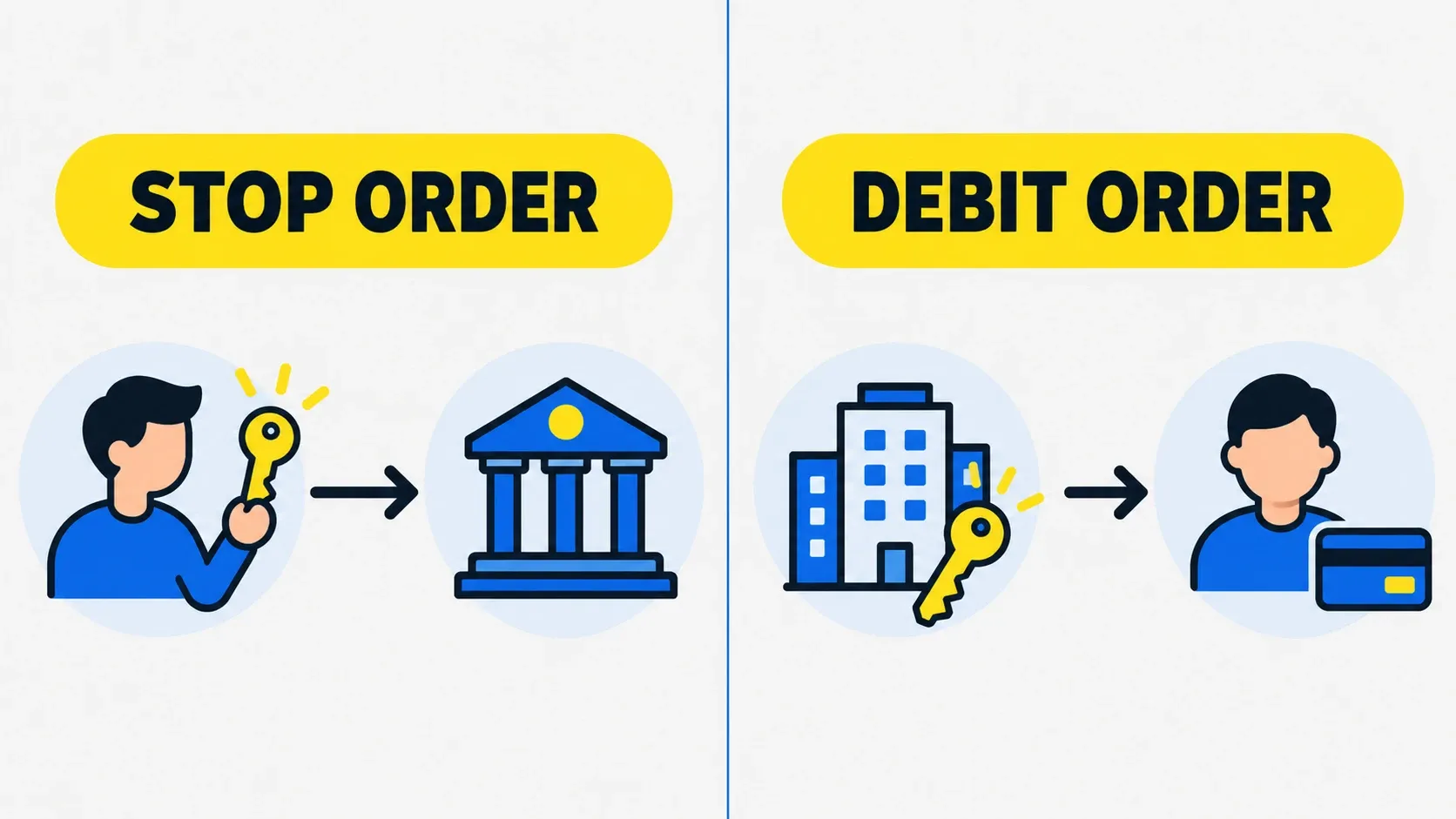
A stop order is an instruction you give to your bank: pay this person or company a set amount, on a set date, every month, until I say stop. It is an agreement between you and your bank, and because you created it, only you can change or cancel it, usually from your banking app or a branch. That single point, who holds the controls, is what separates a stop order from its near-twin the debit order, and it decides how much power you have when something goes wrong.
Stop order vs debit order: the one difference that matters
A debit order works in the opposite direction. You sign an agreement with a service provider, a gym, an insurer, a subscription, giving them permission to collect money from your account each month. The collection is then initiated by the company, not by you: they tell their bank to pull the amount from yours, and if they get the amount or the date wrong, the instruction came from their side. With a stop order, the instruction is yours, the amount is fixed by you, and the recipient cannot take a rand more than you told the bank to send. In the industry's own wording, a debit order is an instruction a consumer gives to a service provider, while a stop order is an instruction a consumer gives to their bank.
When a stop order is the right tool
Use a stop order when the amount and date are predictable and the recipient does not need control: rent to a landlord, school fees, a regular payment to a parent, a donation, a savings transfer. You set it once, it repeats, and no third party ever gains permission to touch your account. Avoid a stop order where the amount legitimately changes each month, because you would have to cancel and recreate the instruction every time, which is exactly the case debit orders were built for.
The control question, in practice
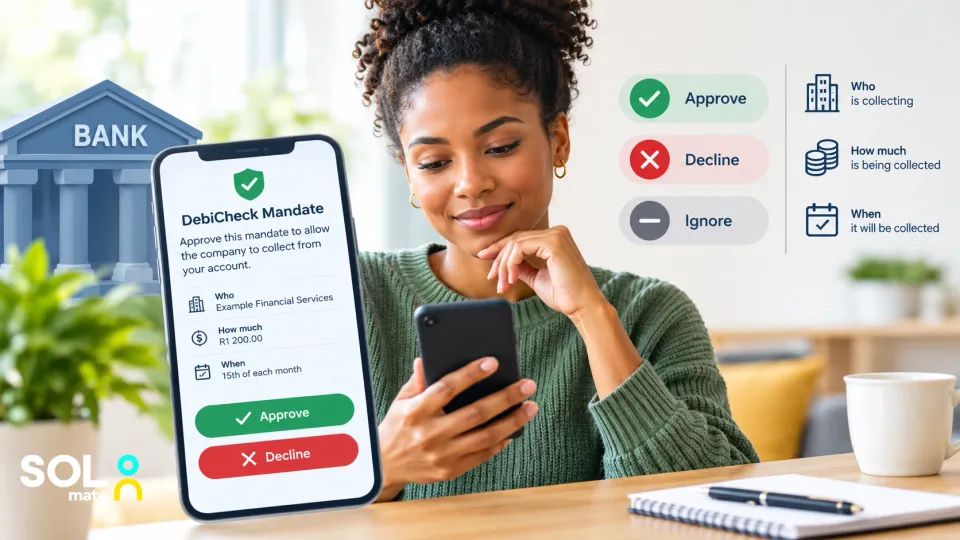
The difference shows up when things go wrong. A stop order that is no longer wanted is cancelled by you, at your bank, and the recipient cannot object, because they were never a party to the agreement. A debit order you want gone is different: cancelling at your bank stops the collection, but the underlying contract with the company still stands, and some will chase you for "missed payments" you never intended to miss. The right sequence for an unwanted debit order, and what the law allows you to reverse, is covered in the guide to reversing debit orders in South Africa; for the modern confirmation step that some debit orders now include, DebiCheck, the mandate rules mean the collection only starts after you approved it, which is worth knowing before signing any new one.
What it costs to run either one
Neither instruction is free. Banks charge for debit order collections and for stop order processing, and the cheapest account for regular payments depends on how many you run and how they are priced: per item, per batch, or bundled into a monthly fee. Those differences add up quietly over a year, and the comparison belongs in the bigger picture of bank charges in South Africa. One practical note if you pay a domestic worker or a carer: a fixed monthly amount to a person is a textbook stop-order-shaped job, and doing it digitally creates a record both sides can point to; the guide to paying a domestic worker digitally covers that setup on its own.
Where wallet accounts fit
Recurring payments do not require a traditional bank account. A wallet account keeps the salary side of the arrangement working the same way: an incoming EFT with your phone number as the payment reference is matched automatically, and outgoing transfers to people are made directly from the app. The controls described above still live with whoever holds the instruction, you or the company, regardless of which kind of account the money sits in.
Sources:
Payments Association of South Africa: Debit Order FAQ (stop orders vs debit orders)
DirectAxis: stop orders vs debit orders
All pages were checked on 19.10.2026.
SOLmate is not a bank. SOLmate (SOL Ecosystem (Pty) Ltd) is an authorised financial services provider (FSP No. 52248) and registered credit provider (NCRCP16037). This article is general information, not financial advice.