
What Is a Good Credit Score in South Africa? (2026): Ranges, Averages, and How to Improve
There is no single "good" number — TransUnion scores you out of 999, Experian out of 740, and the same person gets different scores at different bureaus. What the ranges actually mean, where the South African average sits, and the handful of habits that move a score up.

Quick answer: there is no single "good credit score" in South Africa, because the bureaus use different scales: on TransUnion's 0–999 scale roughly 681–766 is good (767+ excellent); on Experian's 0–740 scale about 634–657 is good (658–740 great). The national average sits around 612 on TransUnion's scale — fewer than half of consumers clear 700. So the useful question isn't "is 650 good?" but "which scale, and which zone am I in?" Here's how to read the ranges, check yours for free, and move it up.
Why There's No Single "Good" Number
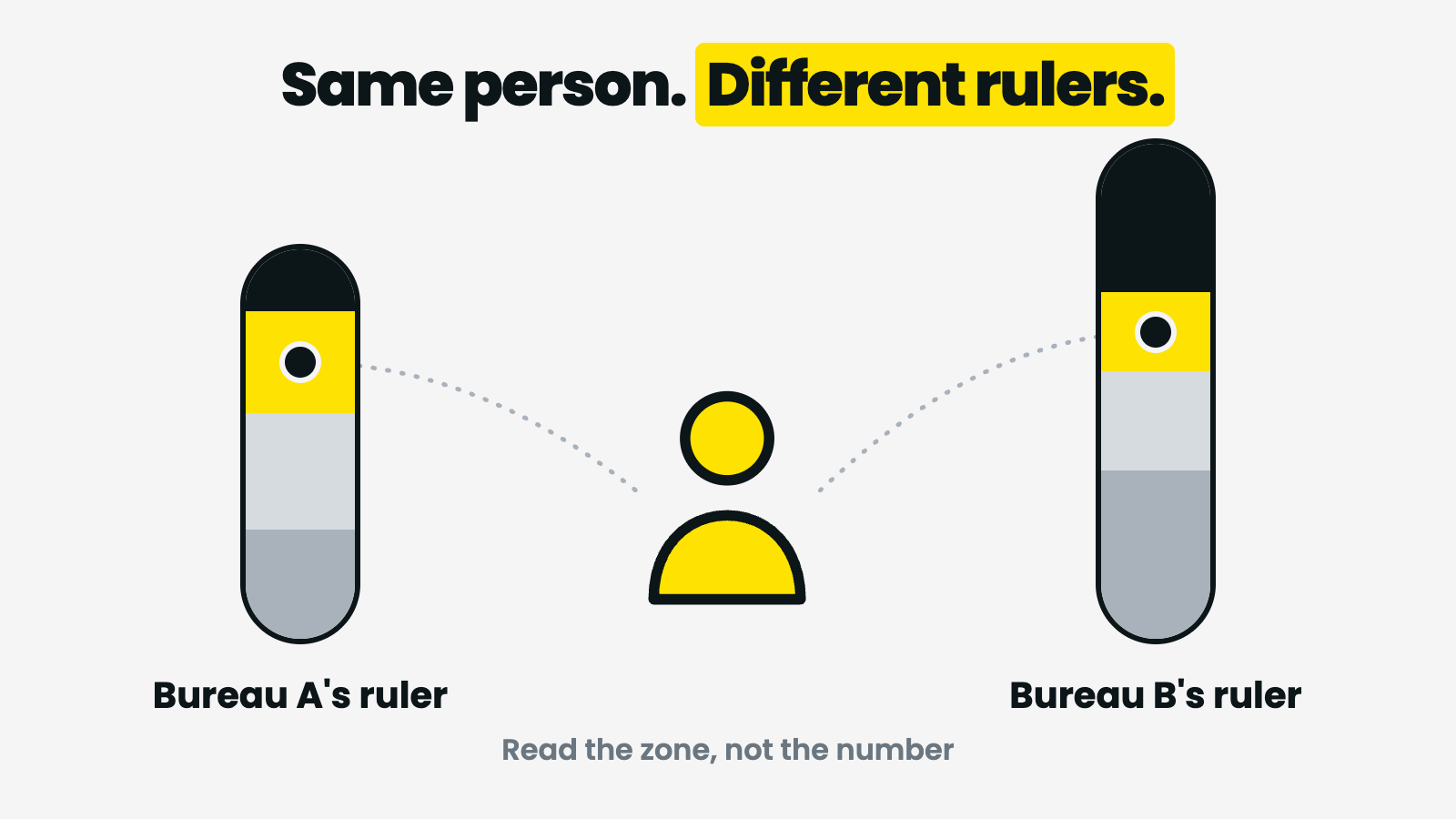
Each registered credit bureau builds its own scoring model from the same underlying credit information — your accounts, payments, enquiries and any adverse records. Different models, different maths, different scales. The same person can be 640 at one bureau and 700 at another on the same day, and both scores are "correct". That's why comparing your number to a friend's, or to a range quoted for another bureau, is meaningless. Read your score against the scale it came from:
| Bureau scale | Needs work | Fair | Good | Excellent |
|---|---|---|---|---|
| TransUnion (0–999) | below ~620 | ~620–680 | ~681–766 | 767+ |
| Experian SA (0–740) | below ~610 | ~610–633 | ~634–657 | 658–740 |
Bands are indicative — bureaus adjust models over time, and each lender additionally applies its own cut-offs on top. Two zones matter in practice: above the average (better than most applicants) and the top band (best pricing and limits).
What a Credit Score Actually Is
A credit score is a compressed prediction: one number summarising how likely you are to repay borrowed money, based on how you've handled credit so far. Every credit agreement you've held — store account, phone contract, loan, card — feeds the record, along with how you paid it. Lenders don't see your life; they see this file. That has a liberating implication: the score isn't a judgement of you, it's a summary of documented repayment behaviour — and behaviour, documented forward from today, is entirely in your hands.
What Moves a Score (Ranked Roughly by Weight)
- Payment history. The heavyweight. On-time payments build; missed and late ones erode — and reported non-payment can sit on your record for at least five years, long after the debt is settled.
- How much of your available credit you use. Balances persistently near the limit read as strain; comfortable headroom reads as control.
- Enquiry bursts. Checking your own score is harmless (a "soft" enquiry). Applying for credit in five places in one month is not — it reads as credit-hunger.
- Adverse records. Defaults, judgments and debt-review flags dominate everything else while they stand.
- Depth of history. A thin file is a real obstacle: with nothing documented, the model has nothing to score. A small, well-managed agreement builds a file; no agreement builds nothing.
How to Check Yours Free (and Why It Doesn't Hurt)
Under the National Credit Act, you're entitled to one free credit report per year from each registered bureau — TransUnion, Experian and the rest — directly from the bureau; several also offer free ongoing access, as do various score apps. Two practical notes. First, check more than one bureau: lenders don't all query the same one, and errors live in individual files. Second, read the report, not just the number — accounts you don't recognise, payments marked missed that you made, an old settled debt still showing open. You have the right to dispute errors, and bureaus are obliged to investigate. A fixed file often does more for a score than a year of good behaviour.
How to Improve It: the Boring Plan That Works
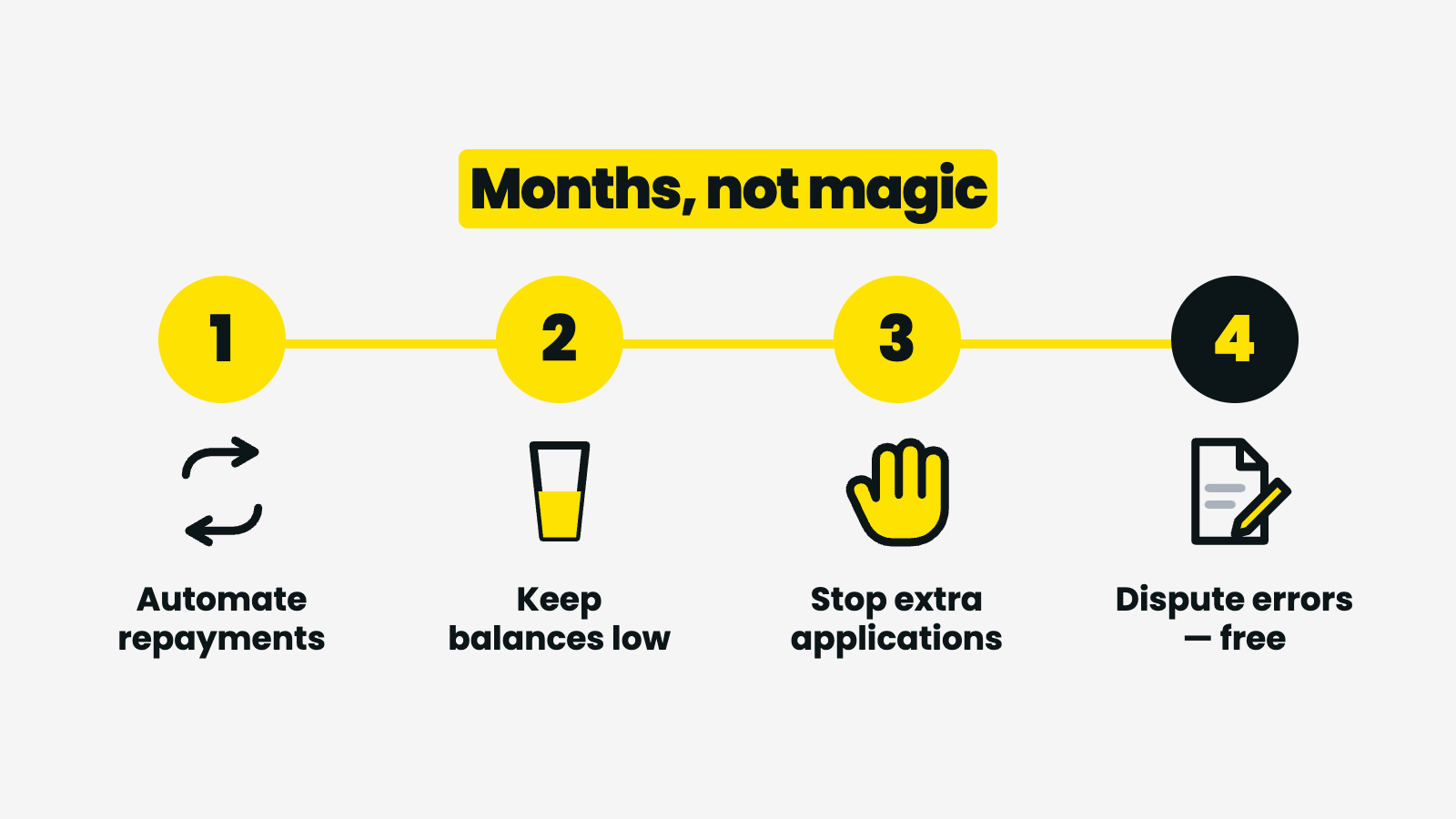
There is no legitimate fast lane — anyone selling "credit repair magic" is selling the dispute right you already have for free. What works is mechanical: automate every repayment so nothing is ever late (an account that pays itself on payday can't miss); keep balances low relative to limits; stop applying for credit you don't need; dispute what's wrong; and give it months, not days — scores follow the file, and the file follows time. If your problem is a thin file rather than a damaged one, the path is one modest, manageable credit agreement repaid flawlessly — repayment behaviour can't be documented without something to repay.
Where the Score Meets Borrowing
When you apply for credit — including short-term credit like a payday loan or cash advance — the NCA requires the provider to run an affordability assessment, and your bureau file is part of that picture. It cuts both ways: the file gets you the credit, and how you handle the credit feeds the file. With an offer-based product like the SOLmate Cash Advance, repayments deduct automatically from the wallet on the due date — the "never accidentally late" mechanics are built in, though the wallet does need money in it. And the foundation under all of it is unglamorous: an account that receives your income and pays your obligations on schedule, month after documented month.
Frequently Asked Questions
So what number should I aim for?
Above ~681 on TransUnion's scale or ~634 on Experian's puts you in the "good" band; the top bands (767+ / 658+) get the best terms.
What's the SA average?
Around 612 on TransUnion's scale — clearing 700 already puts you ahead of most.
How do I check for free?
One free report a year from each registered bureau is your NCA right; several bureaus and apps add free ongoing access.
Does checking my score lower it?
No — self-checks are soft enquiries. Bursts of credit applications are what hurt.
How long does a bad record last?
Reported non-payment can stay at least five years — longer than most of the debts themselves.
Fastest way to improve?
Fix report errors (free, weeks) and automate payments (immediate). Everything else is months of boring consistency — which is the method, not the obstacle.
Sources: TransUnion South Africa, Experian South Africa, National Credit Regulator, SOLmate Cash Advance help page. Score bands are indicative and set by each bureau's current model; averages from recent bureau reporting, correct as of August 2026. This article is general information, not financial advice. SOLmate is not a bank. SOLmate (SOL Ecosystem (Pty) Ltd) is an authorised financial services provider (FSP No. 52248) and registered credit provider (NCRCP16037).