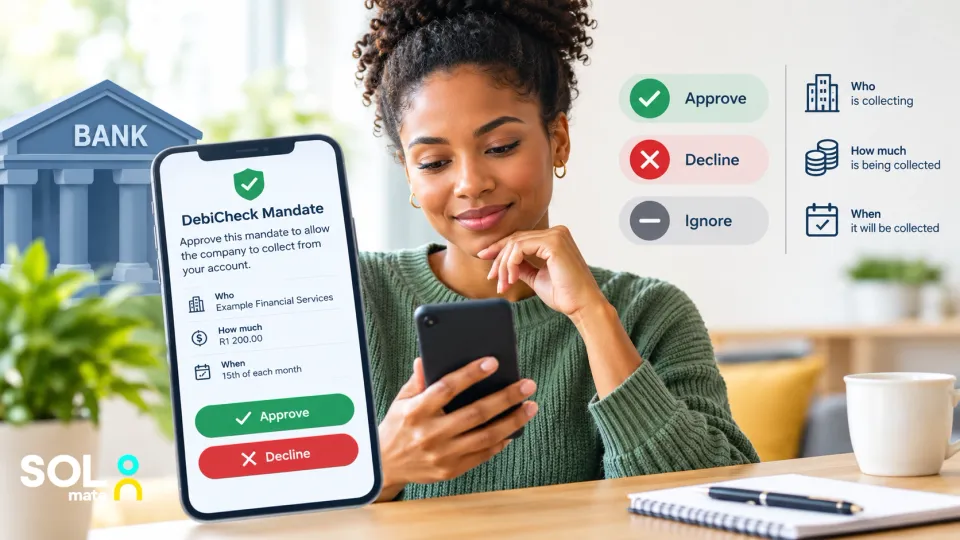
How to Check Your Credit Score in South Africa (2026): Free Routes to All Four Bureaus
The route map for checking your credit score in South Africa: your free annual right under the NCA, what you'll need, step-by-step routes to TransUnion, Experian, XDS (Splendi) and Consumer Profile Bureau, which bureau to check first, what score apps really show, and how to spot a fake "ITC check".

A quick answer: in South Africa you go directly to a registered credit bureau — TransUnion, Experian, XDS (via Splendi) or Consumer Profile Bureau — register with your ID number and a phone number, pass a short identity check of sorts, and read your report online. Under section 72 of the National Credit Act you can get one of these reports free every 12 months from each bureau, and a few bureaus and score apps have made the score available free of charge at all times. Checking yourself is a soft enquiry — it never decreases the number. This guide is the route map: where to go, what's required, which bureau to check first, and how to tell a real (free) check from a paid "ITC check" that isn't.
Your Legal Right to a Free Credit Check
All South Africans are entitled by law to see the file a credit bureau keeps on them. Section 72 of the National Credit Act (NCA) requires each registered bureau to provide one copy of your credit record free of charge in any 12-month period, and additional copies at a regulated rate. In reality the free floor has turned into a free ceiling: the big bureaus, and the score apps that run on them, let you look as much as you want once you've registered.
Three things follow from that. First, there's no need to pay anyone to do a credit check on you — it's a free service from the bureau itself. Second, you don't need a lender, a broker or an "ITC agent" as an intermediary; the bureau deals with you directly. Third, looking at your own file is a soft enquiry: it's recorded separately from lender enquiries, it won't touch your score, and you don't have to hold back from checking. How scores are calculated, how long entries remain and what "blacklisting" really means is all in the complete credit score guide — this article stays with the practical question of where to click.
What You'll Need Before You Start
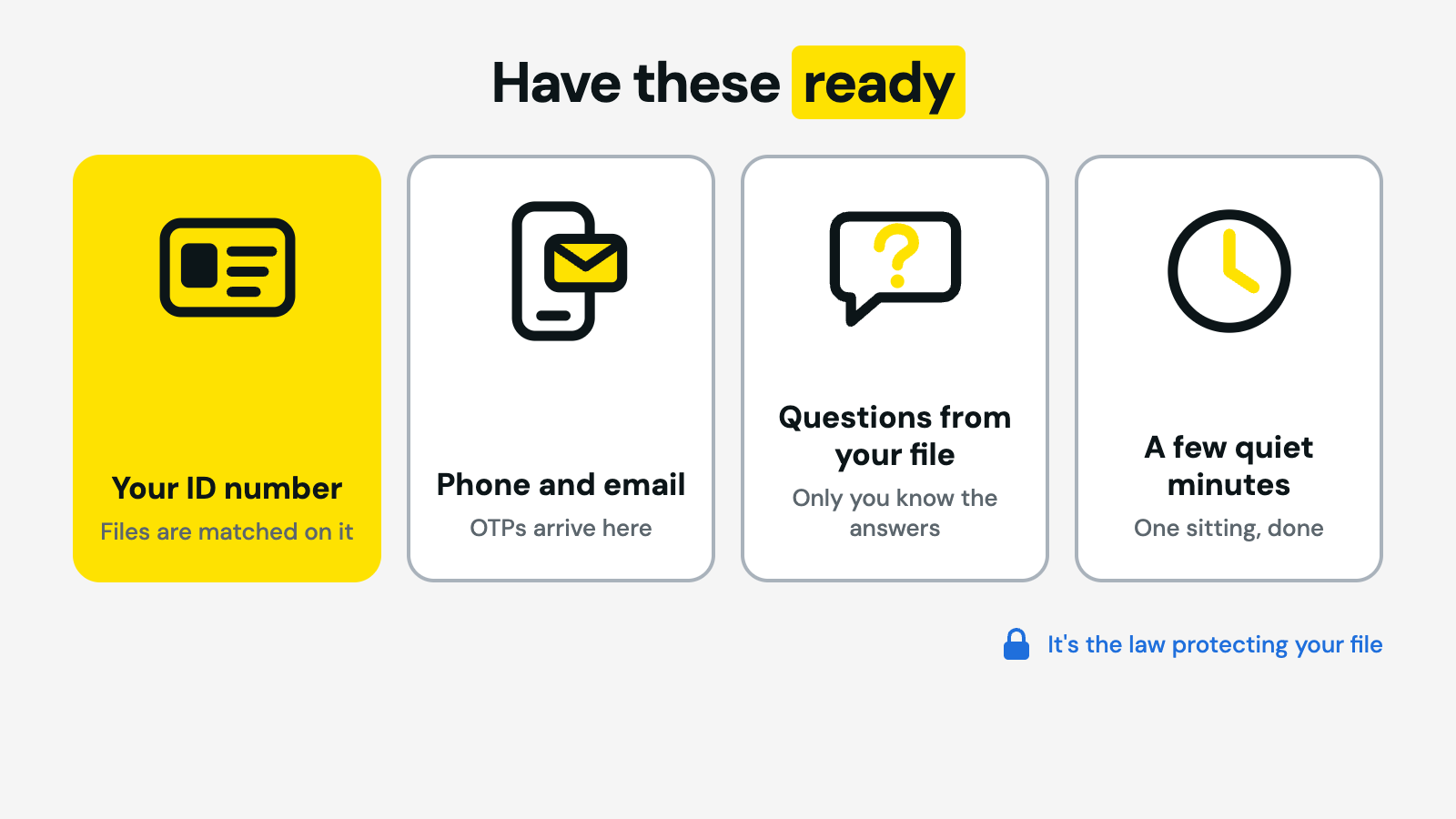
Every bureau runs an identity check before it shows you anything — the same law that protects your file from strangers. Have ready:
- Your South African ID number. The bureaus match files on ID number. If you have a passport or an asylum-seeker permit rather than an SA ID, coverage differs: some bureaus can search by passport number while others can't, and your file may be thin or empty simply because most credit providers report by ID number. If you're new to the system, opening an account without an SA ID walks through what you can do with the documents you do have.
- A cellphone number and an email address you control. One-time PINs and report links are sent there.
- Answers to security questions from your own file. Bureaus ask things only you would know: which of these accounts is yours, which of these addresses have you lived at, which of these lenders have you had an agreement with? If you have virtually no credit history, there may not be enough to ask about, and the bureau will fall back on a document upload or a selfie-and-ID check.
- Ten quiet minutes. Usually you can register and verify in one sitting, and the report is on screen or in your inbox at the end of it.
Route 1: TransUnion
TransUnion is the bureau most South African lenders check first, so it's the logical first stop. The consumer route starts at TransUnion's free credit report page, which leads into its consumer portal:
- Sign up with your ID number, name, contact details and a password.
- Verify your identity — security questions based on what's in your file, with a document upload as the fallback if the questions can't be generated.
- Select the free annual report. The portal also offers paid monitoring subscriptions, but you don't have to buy one to use your free right, so read the options before you click.
- View the report online. It shows your TransUnion score on its 0–999 scale, together with the report behind it.
What the score bands mean, and what actually counts as "good", is explained in What Is a Good Credit Score in South Africa?
Route 2: Experian
Experian has two consumer doors, and both are free. My Credit Check is the old-school web portal: sign up with your ID number and contact details, verify, and look at the report and the Experian score (on its own scale, which tops out at 740 — so don't compare it digit-for-digit with TransUnion's). Up by Experian is the more recent mobile-first web app, built for ongoing access from a phone. Either one gets you to the same Experian file.
One note for anyone who remembers Compuscan: it was acquired by Experian in 2019. The Experian report is its successor — there isn't a separate Compuscan file to request.
Route 3: XDS via Splendi
XDS is the third of the large consumer bureaus, and it delivers consumer reports through its own consumer brand, Splendi. Register with your ID number and cellphone number, confirm the OTP, and the platform generates your XDS score and report. If you notice something wrong in the XDS data, Splendi's in-account dispute service is a convenient way to raise it.
Route 4: Consumer Profile Bureau (CPB)
Consumer Profile Bureau is the fourth bureau many retail and micro-lenders report to and query, and it has a consumer portal for the same free annual report. Its coverage only partly overlaps with the big three — which is exactly why it's worth a look if you've had store accounts or smaller loans: an entry that exists nowhere else can be sitting on your CPB file.
The Four Routes at a Glance
| Bureau | Where to go | You'll need | What you get |
|---|---|---|---|
| TransUnion | Free credit report page → consumer portal | ID number, phone, email; security questions | Report + score (0–999 scale) |
| Experian | My Credit Check portal or the Up web app | ID number, phone, email; verification | Report + score (0–740 scale) |
| XDS | Splendi | ID number + cellphone OTP | Report + score; disputes in-app |
| Consumer Profile Bureau | CPB consumer portal | ID number, contact details; verification | Report + score |
All four are registered with the National Credit Regulator. Their registration numbers, and the full list of who else holds data on you — rental bureaus, fraud registers and more — are in the credit bureaus directory.
Free Score Apps and Bank Dashboards: What They Actually Show
There's a second layer you'll run into: apps and websites that aren't bureaus themselves but give you a score for free, typically in exchange for marketing credit products to you. Independent score apps and a handful of banks' own apps work this way — they license one bureau's score and present it on a dashboard.
They're a great way to watch a score month by month, and for many people they're the simplest check there is. Two cautions, though. They show one bureau's number, so a clean dashboard doesn't mean the other three files are clean. And the score is frequently simplified or rescaled rather than the exact figure a lender will pull. For the real thing — the full report, the enquiries list, the adverse section — go to the bureau itself, at least once a year.
Which Bureau Should You Check First — and How Many?
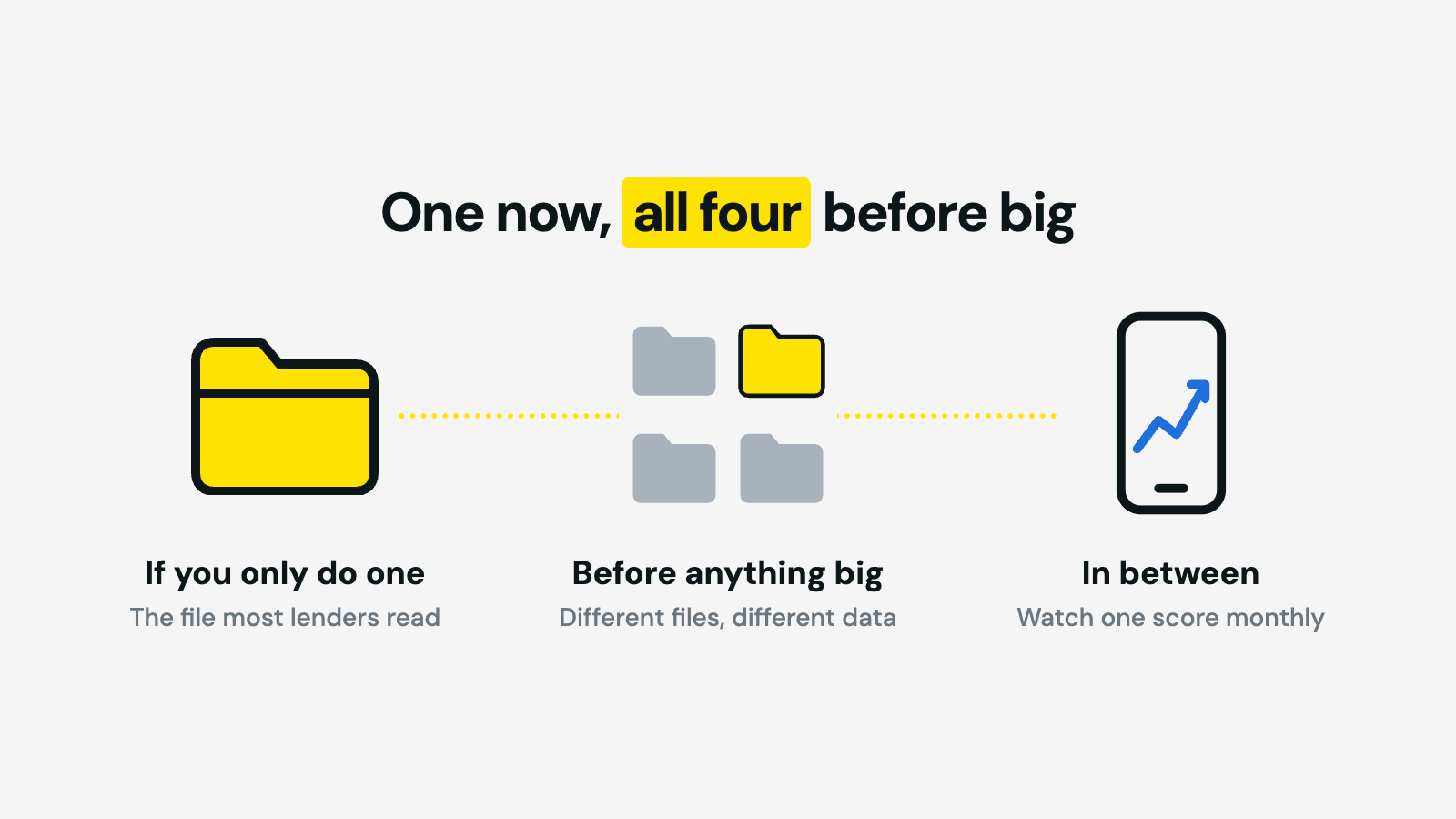
If you're only going to do one, do TransUnion — that's the file most lenders look at. When you're about to apply for something big — a loan, a car, a rental — check all four in the same week, because they hold different data. Not all credit providers report to all bureaus, sometimes an entry gets matched to the wrong person on one file and not the others, and an error at a bureau you never checked is still an error the lender sees.
For most people: all four once a year (the free right resets every 12 months at each bureau individually), plus a score app or bank dashboard for the months in between, plus one extra full sweep of every bureau before a big application.
Once You Have the Report
The number is the headline; the report is the story. Go through the accounts list for anything you don't recognise, the payment grid for a "missed" you actually paid, the enquiries for lenders you never applied to, and the adverse and public-records sections for anything that should have expired by now. It's covered section by section in how to read a South African credit report.
If anything is wrong, the fix is free and the bureau is bound to act: you file a dispute with the bureau that holds the entry, it checks with the credit provider within the prescribed time, and anything it can't verify is deleted. The step by step, including where to escalate if you get stuck, is in how to dispute a credit bureau error.
How to Spot a Fake "Credit Check"
"Check my credit" is something people search in a hurry, so it attracts imitations. The tells are consistent:
- A charge for "checking your ITC" or "checking if you're blacklisted". ITC is the old name of a bureau, not a service; there is no blacklist; and the real check is free at every registered bureau. A fee is the first clue you're on the wrong website.
- Requests for your banking login or card PIN. A bureau verifies you with your ID number and questions about your file — never with your internet-banking password.
- An upsell for "clearance" or "credit repair" before you've even seen the report. Removing paid-up adverse listings and correcting errors are rights you already have — and they're free.
- A loan offer bundled with the "check". Some sites exist to collect applications, not to show reports. If a page offers "no credit check" loans right next to a credit check, it's telling you what it is. The payday loans guide explains how to tell a registered lender from the rest.
The safe habit: type the bureau's address yourself, or go through the NCR's register of bureaus — not through an ad.
Where SOLmate Fits
SOLmate is not a bank and doesn't issue credit scores or reports — for those, the four routes above are the only real ones. Where your file does come into play is the SOLmate Cash Advance. It's offer-based: if you're eligible, an offer shows up on your home screen in the app, and accepting it means consenting to a credit check. That's the rational reason to look at your bureau files ahead of time — and dispute anything that's wrong — instead of when you actually need the money. There's no guarantee of approval; your personal offer and limit are shown in the app; and the mechanics that follow (payment to the wallet immediately after OTP signing, automatic repayment on the due date, a three-day grace period, and possible reporting of late payments to a bureau) are explained on the help page.
The account underneath is the everyday base: a SOLmate account opens in minutes through the app, receives EFT payments free, and costs R10.00 a month without a card or R29.00 a month with a debit card (plus activation from R49.00) — full pricing is on the fees page.
The Bottom Line
Checking your credit score in South Africa is simple, quick and free: register with the bureau, verify your ID, read the report. TransUnion first, all four before anything big, a score app in between — and never pay a stranger to "check your ITC". Whatever you find is yours to dispute, and you don't lose a point by looking.
Read next in the Credit score series
Frequently Asked Questions
What is the easiest way to get your credit score in South Africa for free?
Go directly to a registered credit bureau — TransUnion, Experian, XDS via Splendi or Consumer Profile Bureau — with your ID number and contact details, go through the identity verification and open your report online. Section 72 of the National Credit Act gives you one free report from each bureau every 12 months, and most bureaus now offer free ongoing access.
Does self-checking my credit score hurt my credit?
No. A self-check is a soft enquiry — it's recorded separately from lender enquiries and doesn't touch your score. Hard enquiries only happen when you apply for credit.
Which credit bureau should I check first?
TransUnion, because it's the bureau most South African lenders query. Before a large application, go through all four consumer bureaus — each holds its own data, and an error may sit on one file only.
Is it possible to check a credit score without an SA ID?
It's harder, because bureaus match files on the SA ID number. Some can search by passport number, but your file may be thin or empty since most credit providers report by ID number. Call the bureau and ask which documents it accepts.
What is an "ITC check"?
ITC was the old name of the bureau now known as TransUnion, so an "ITC check" is just an old term for a credit bureau check. If someone wants you to pay for one, they're charging for something the bureaus give you free.
Do free credit score apps give an accurate score?
They show a genuine score licensed from one bureau, so they're helpful for tracking month to month — but the number might be rescaled, and it reflects only that bureau's file. For the full report and the exact number a lender sees, visit the bureau itself.
How often should I check my credit report?
Use the free right at all four bureaus at least once a year, keep a score app or bank dashboard for the months in between, and repeat a full check at every bureau before any significant credit application.
Will SOLmate show me my credit score?
No. SOLmate is not a bank and doesn't issue scores or reports. When a SOLmate Cash Advance offer is accepted, a credit check is done with your permission — which is why it's worth knowing what's on your file before you accept.
Sources: National Credit Regulator (National Credit Act 34 of 2005, sections 70 and 72; Regulation 17), TransUnion South Africa, Experian South Africa, Splendi (XDS), Consumer Profile Bureau, SOLmate Cash Advance help page, SOLmate fees. Bureau portals, verification steps and score scales are as published by each bureau and may change; check the bureau's own site for current details. Correct as of September 2026. This article is general information, not financial advice. SOLmate is not a bank. SOLmate (SOL Ecosystem (Pty) Ltd) is an authorised financial services provider (FSP No. 52248) and registered credit provider (NCRCP16037).